HokkaVia · Guide 10
Hokkaido Family Trip: 5–7 Day Itineraries, Cars & Costs
Plan a Hokkaido family trip that works for the people travelling with you. Start with our five- and seven-day itinerary examples, then choose the right mix of city transport, countryside nights and a private car with room for children, grandparents and bags.
Updated 19 October 2026
Request a family-tour quote ↗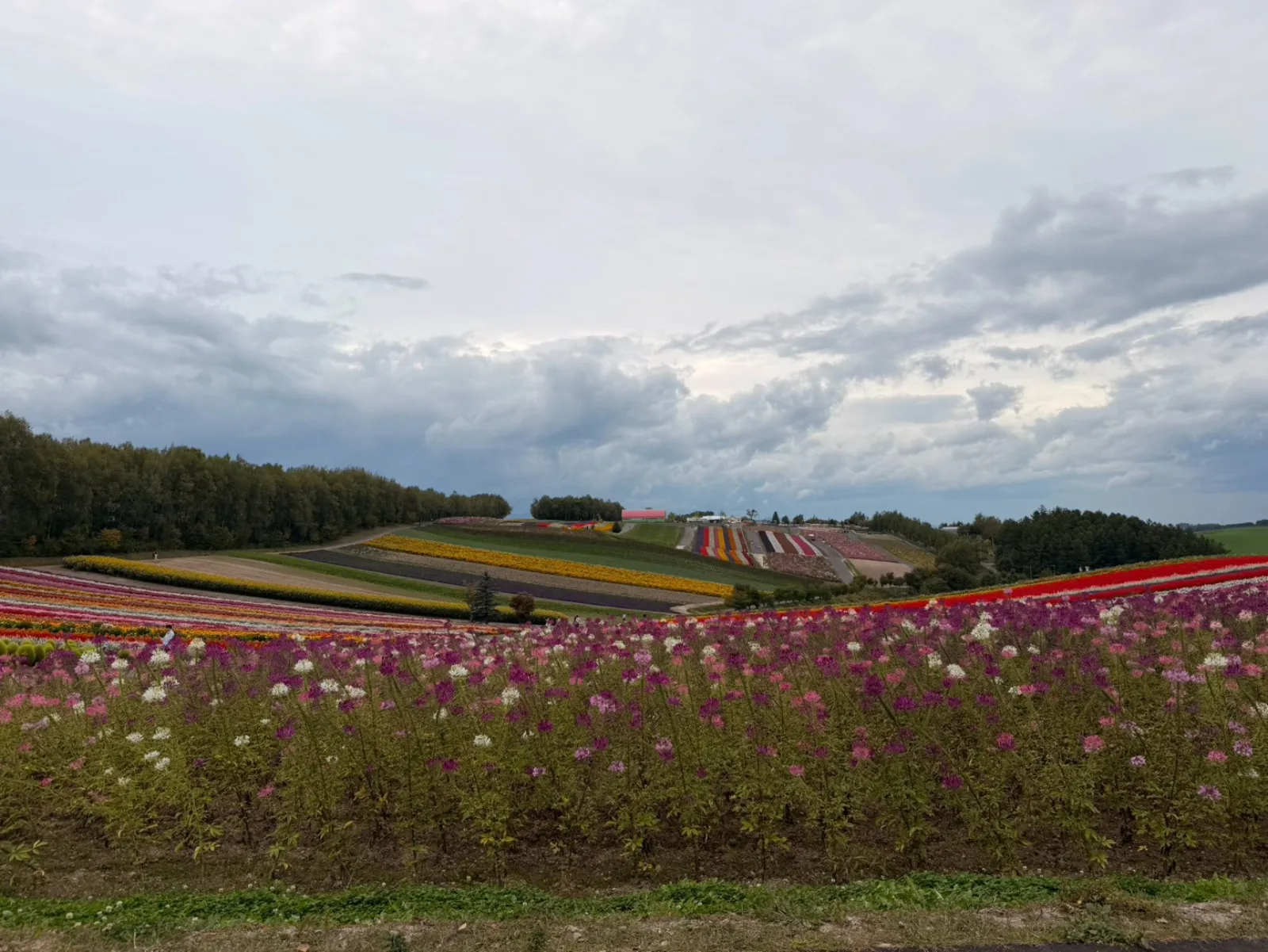
HokkaVia · Planning guide
The short answer
For a first family visit, five days suits a Sapporo base with a separate Otaru day. Seven days gives you room for a Furano–Biei overnight leg in the green season, or a slower snow-focused stay in winter. Use trains where the connection is simple and consider a private driver for scattered attractions or travel with bulky luggage. The best route leaves time for meals, rest and weather changes; it does not try to cross Hokkaido every day.
How many days do you need for a Hokkaido family trip?
Choose your number of hotel nights before collecting attractions. With young children, five days can be enough for a first taste of Sapporo and Otaru if you keep one base. Seven days allows a countryside overnight without turning the arrival and departure days into long sightseeing drives. These are planning recommendations, rather than a claim that every family needs the same length of holiday.
Write down the age of each child, the longest comfortable outing for the grandparents, and the experiences everyone actually wants. One family may prefer animals and ice cream; another may want a ski lesson and two quiet resort days. A toddler’s nap, a restaurant reservation and the final flight are real timetable commitments. Give them space before filling the remaining hours.
Separate the places you must visit from those you would enjoy if time allows. For example, a Sapporo city day, an Otaru day and a Furano–Biei overnight are three different pieces of a trip. Lake Toya, Noboribetsu, Hakodate and eastern Hokkaido need their own geographic decisions. Adding them to the same short holiday is not simply adding another attraction.
For winter, spend more nights at fewer bases. For a summer flower trip, consider sleeping near the countryside sights. If your flight lands late, make the first night a straightforward hotel arrival. A car with a driver helps with transfers, but cannot give a tired child an extra evening of energy.
Travelling with toddlers, older children and grandparents
Build each day around one main activity and one nearby optional stop. A workable family day might be a morning viewpoint, a proper lunch and a short shopping or park visit before returning to the hotel. Reserve the optional stop for a group that still wants it, rather than making everyone finish a checklist.
With a toddler, put food, toilets and a rest opportunity between the attractions. Avoid placing the day’s most important visit in the usual nap window. With school-age children, a shared choice can work well: one person chooses the morning activity and another chooses the snack or souvenir stop. Teenagers may appreciate more time for a specific activity and fewer brief photo stops.
For grandparents, ask about walking surfaces, steps and the distance from the drop-off to the entrance. A private vehicle reduces some walking between transport connections, but it does not make every viewpoint accessible. Discuss a folding wheelchair, walking aid or help boarding before selecting the car. An ordinary passenger vehicle should not be described as wheelchair accessible without confirming the actual arrangement.
Agree on an early-finish option. If a child is cold or a longer lunch is more enjoyable than the next viewpoint, changing the optional part of the day is a sensible use of a private itinerary. Tell us which stop matters most so that it stays protected when the plan needs to shrink.
HokkaVia
Plan a family journey at your pace
Tell us your dates, ages, luggage and the places you most want to see. We will suggest a realistic route and quote a suitable private vehicle. Sending an enquiry does not confirm a booking.
Five- and seven-day Hokkaido family itinerary examples
The following are independent planning examples, not fixed packages. Hotels, meals and admissions are separate from a vehicle booking. Confirm the attraction calendar, travel times and child-seat requirements for your dates.
Five days: keep a Sapporo base
| Day | Main plan | Why it works |
|---|---|---|
| 1 | Airport to Sapporo hotel; short local outing only if arrival permits | Protect the first meal and bedtime |
| 2 | One Sapporo activity, lunch and optional nearby park or shopping | Keep a manageable first full day |
| 3 | Otaru canal, lunch and selected Sakaimachi shops | Make the mountain optional and return before the group is exhausted |
| 4 | Flexible Sapporo/suburban day or confirmed age-suitable activity | Leave a weather swap and a rest opportunity |
| 5 | Breakfast, packing and airport journey | Use the flight time to set the departure |
This route suits a family that wants manageable outings and fewer checkouts. The flexible fourth day is deliberate: it can move if rain affects the viewpoint day or snow affects Otaru. If the first and last flights leave very little time, count this as three usable sightseeing days, rather than five full touring days.
Seven days: add one countryside night in the green season
| Day | Main plan | Overnight base |
|---|---|---|
| 1 | Arrive, transfer and settle in | Sapporo |
| 2 | Gentle Sapporo day | Sapporo |
| 3 | Separate Otaru day | Sapporo |
| 4 | Travel to Furano side; one flower or food stop and a proper lunch | Furano/Biei area |
| 5 | One Biei garden or hills stop; Blue Pond if suitable; return | Sapporo |
| 6 | Flexible city day, rest or one confirmed activity | Sapporo |
| 7 | Airport journey with a date-specific buffer | Departure |
For younger children, use the extra nights to slow down rather than add more towns. If the countryside is the reason for travelling, two nights in the Furano or Biei area may be better than one; remove another excursion to create that space. A zoo visit also deserves its own substantial time block instead of being added after every flower garden.
A winter version with fewer hotel moves
Keep the Sapporo city and Otaru days, then substitute a confirmed snow activity or a two-night resort stay for the flower itinerary. Check activity age and height rules directly with the operator. Do not promise a summer garden, snow play and an evening illumination as if all three run on the same dates. If skiing is the priority, stay near the chosen lesson meeting point and make the transfer day a transfer day.
Family-friendly city days: Sapporo and Otaru
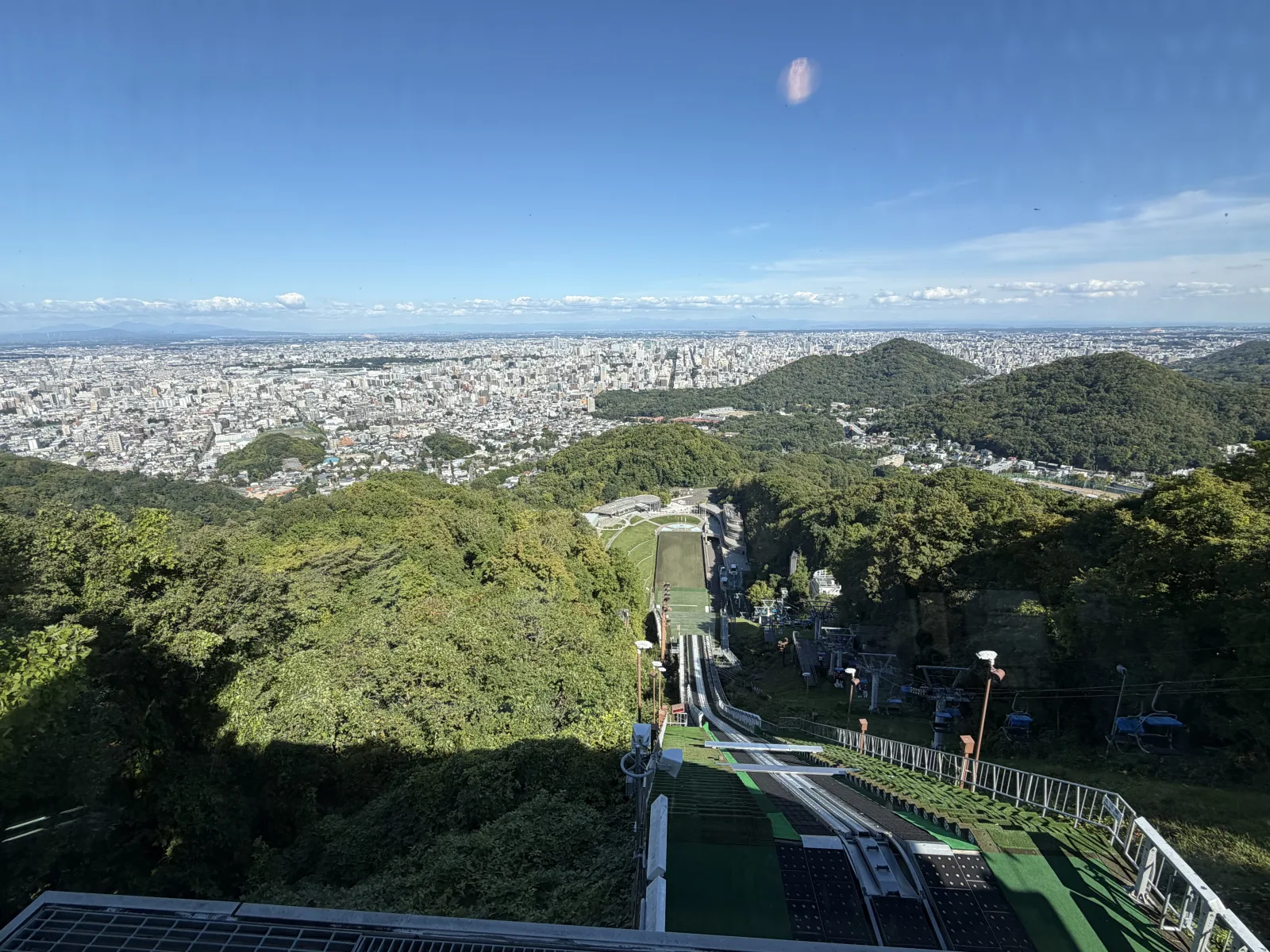
Sapporo: Use the city as a gentle first base. An early arrival might allow a short neighbourhood outing; a later flight is a reason to eat near the hotel and rest. On a separate day, the Okurayama ski-jump viewpoint can be a memorable shared activity. The lift and observatory are subject to operating conditions, so check opening information and whether the experience suits everyone in your group.
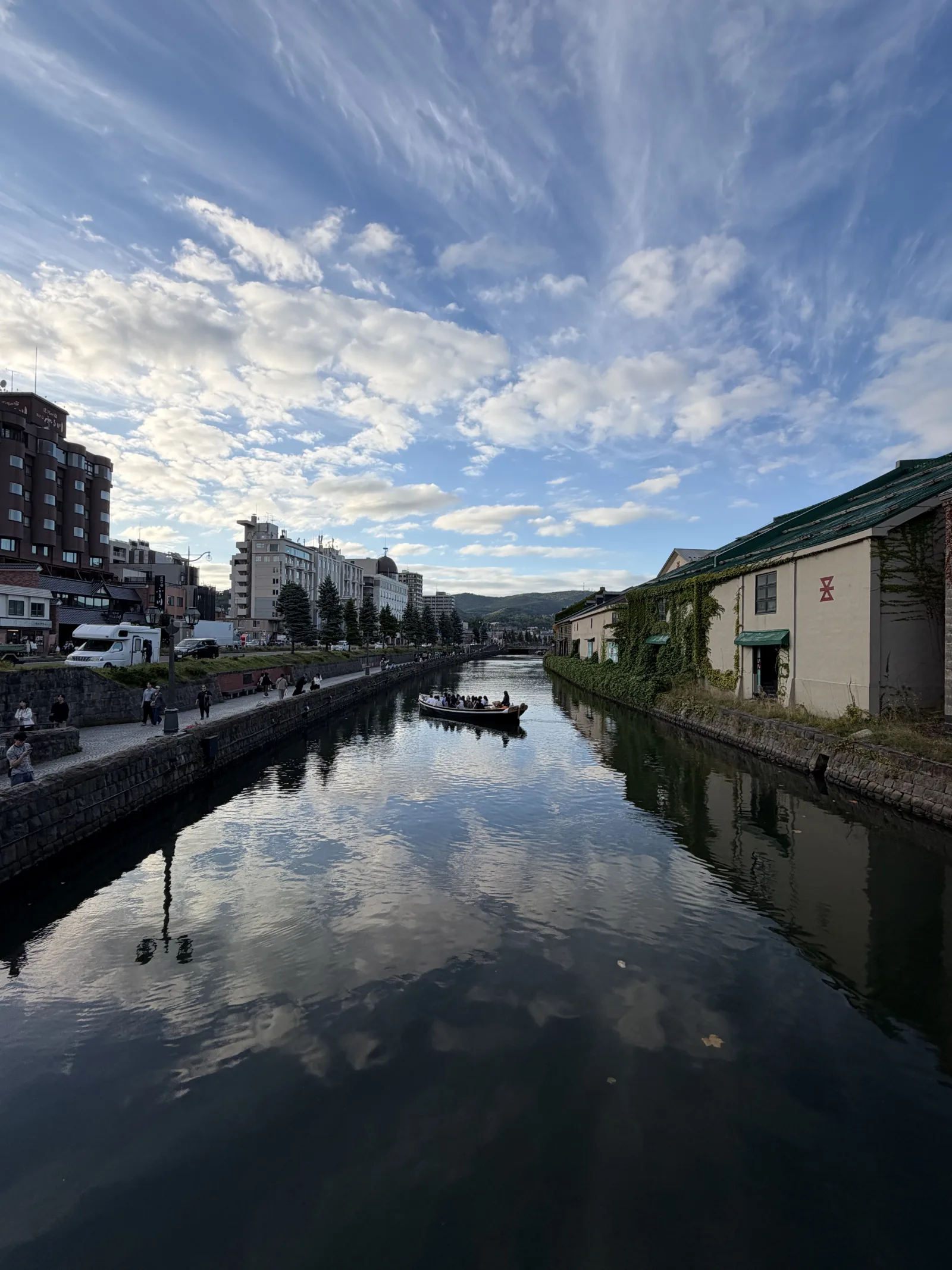
Otaru: The canal and Sakaimachi shopping street make a coherent walking area for a day trip from Sapporo. Agree on a meeting point and a realistic walking distance before the family disperses. A leisurely lunch, short shopping stops and time to return to the vehicle or station are more useful than trying to cover every attraction. If someone cannot walk far, tell the operator in advance so the drop-off and pickup plan can be discussed.
Both days work by train for many families with light bags. A private car may help if the party wants hotel pickup, several separated stops or less walking between transport connections. Choose the mode around the day you actually want, rather than assuming one option is always best.
Furano, Biei and Asahikawa without a rushed circuit
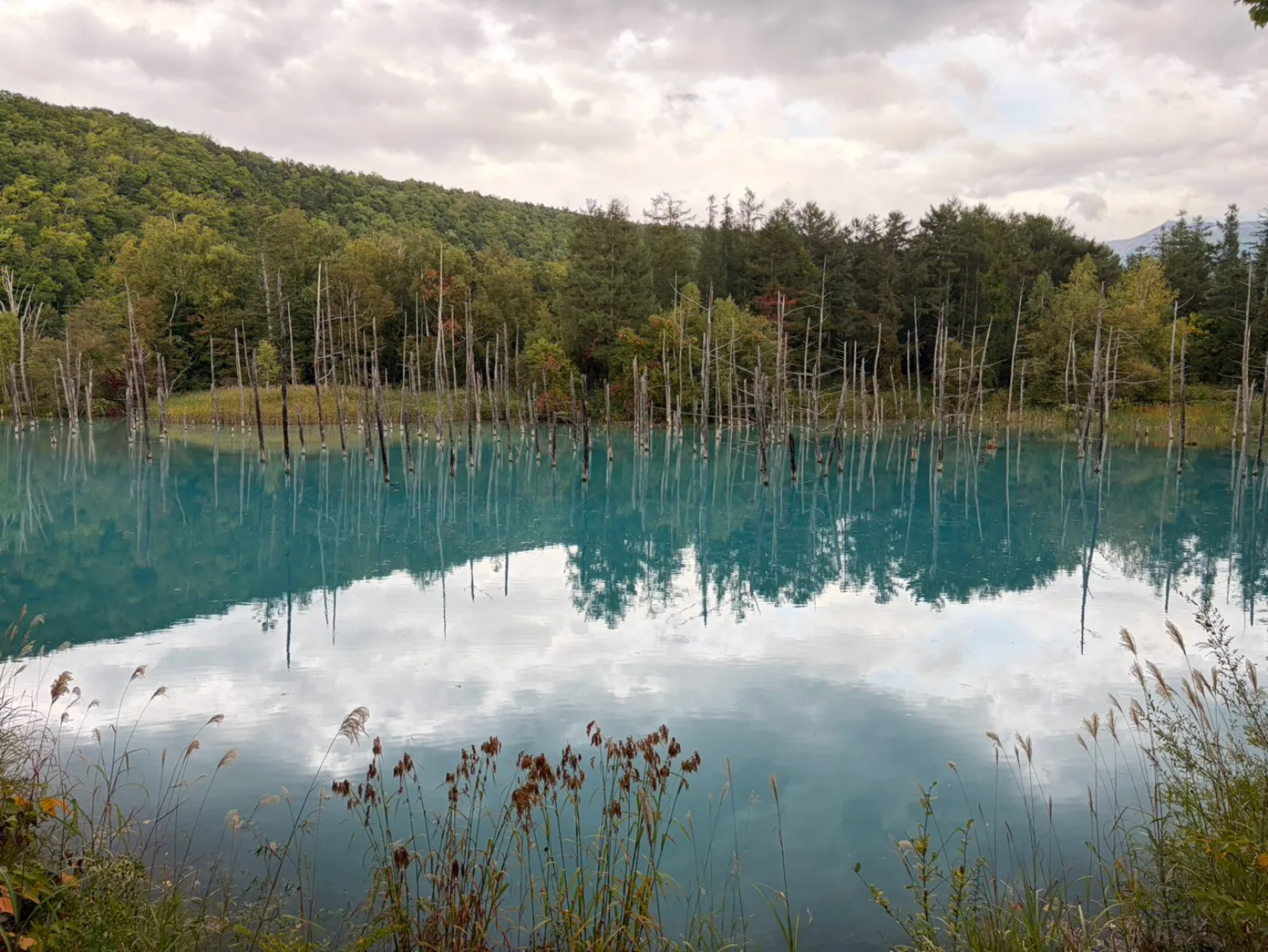
Biei in summer: At Shikisai-no-Oka the patterned flower fields are the draw. The official tourism site describes a tractor-drawn sightseeing bus around the grounds; check the attraction’s current operation before promising that ride to the children. The Blue Pond changes colour with light and season, so treat a particular shade as a possibility rather than a guarantee.
Furano and Asahikawa: Pick a flower stop, a food break and perhaps one more nearby activity. Asahiyama Zoo can be the main event of another day, especially for young children who want time to watch the animals. Combining the zoo with every Furano and Biei stop after an airport arrival makes a demanding itinerary. A countryside overnight stay can remove the pressure to drive back to Sapporo late in the day.
In winter, the same area feels completely different. Check which attractions operate on your date, put warm indoor breaks between outdoor stops, and keep a flexible backup if weather changes. Our Furano/Biei guide covers the seasonal contrast in more detail.
Train, self-drive or private car with a driver?
Rail can be a good choice for direct city-to-city travel when you are carrying little luggage. Self-drive gives flexibility but also means navigating, parking and handling road conditions yourself. A private car can collect your family at the airport or hotel and connect dispersed attractions without repeated transfers. Compare the total cost for your whole party, including bags, child seats, pickup, service hours, tolls and parking.
Ask whether your route is a one-way airport transfer or a sightseeing charter with stops. The two services are quoted differently. Our self-drive versus private-driver guide explains the trade-offs in more detail.
Train and stroller practicalities before you decide
JR Hokkaido says strollers may be taken on board without an extra charge, but asks travellers to keep them from blocking others by folding them and placing them in front of the seat or an available luggage area. Some trains have dedicated luggage space; on others, passengers must manage their own bags. Its published carry-on rules also set limits on the number, size and weight of bags, so check the current official guidance for your exact equipment.
Think through the complete door-to-door journey: hotel to station, platform access, train, transfer, arrival station and final hotel. One stroller and two large suitcases can be easy for two adults on one direct train but difficult with a tight connection and a tired child. Luggage delivery can help on some routes; confirm timing and hotel acceptance rather than assuming bags will arrive when you do.
For a private car, send a photo or measurements of unusual items such as a double stroller or ski case. Ask where the bags will go once the child seats are installed. The same family can need different vehicles for a sightseeing day with daypacks and an airport transfer with all its luggage.
Choose a family vehicle by seats, restraints and luggage
Give us one combined passenger-and-bag list. Include adults, each child’s age and approximate size, the required child restraints, suitcases with dimensions, stroller when folded, ski bags and any mobility equipment. A car with six passenger seats does not automatically carry six people, six large cases and a stroller.
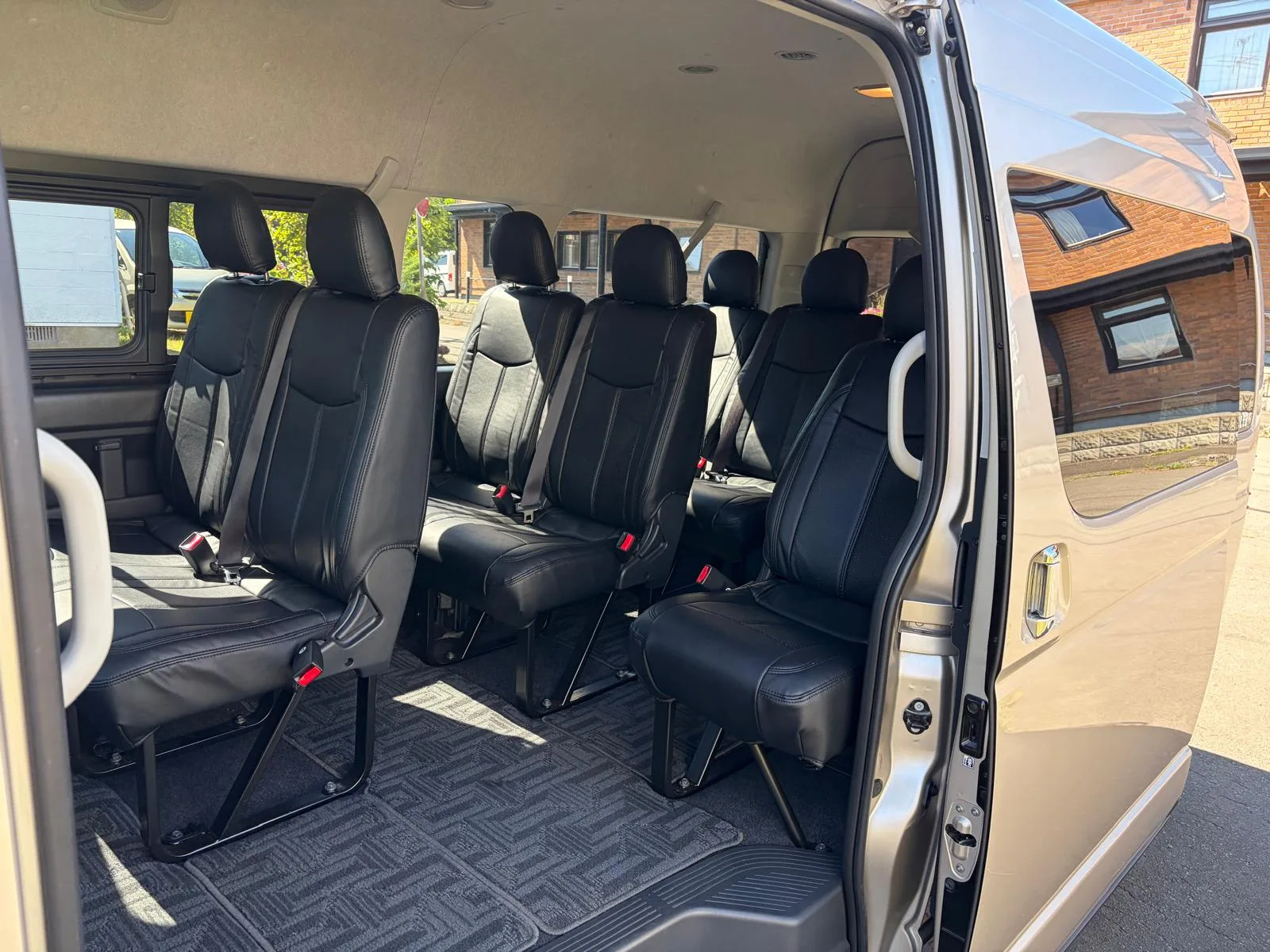
An Alphard can suit a smaller family that wants comfortable passenger seating. Our current fleet guidance uses about four guests and four large suitcases with the third row folded as one planning example; using more seats changes the available bag space. A HiAce is worth comparing for larger families, several generations or bulky equipment. Its exact configuration still needs confirmation. See the vehicle and luggage guide for the layouts.
| Family situation | Vehicle discussion | Capacity detail to confirm |
|---|---|---|
| Small family on a day outing | Alphard can be a useful starting point | Restraints and daypacks with all required seats in use |
| Four people changing hotels | Compare the bag list with the Alphard layout | Third-row use, four large cases and folded stroller together |
| Larger or multigenerational group | Compare a suitable HiAce configuration | Seat count after restraints, luggage access and steps |
| Ski bags, double stroller or mobility aid | Request an item-by-item fit check | Dimensions and loading arrangement, not only item count |
Child seats should be discussed before the quote is final. Ask which restraint can be supplied, where it will be fitted, whether it suits the child and whether any charge applies. A parent holding an infant is not a substitute for an agreed suitable restraint. Confirm the actual arrangement with the operator rather than treating a generic vehicle photograph as proof.
The bags for a day outing are different from the bags for a hotel move. You might use the Alphard comfortably on an Otaru day with daypacks, while needing a larger vehicle on the airport or countryside transfer. Send a photograph or measurements of an unusual double stroller or long equipment case; this is more useful than simply saying “normal luggage.”
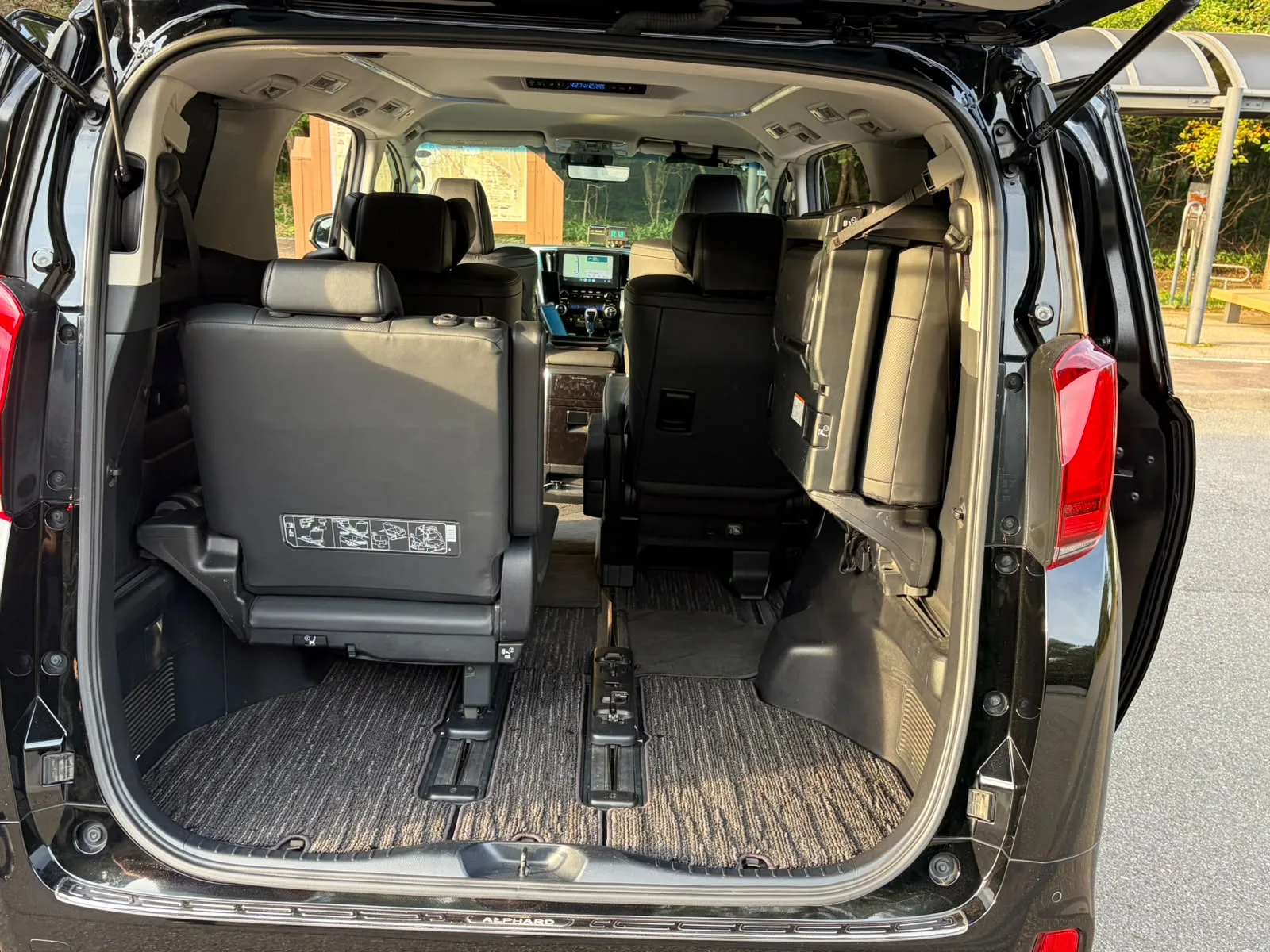
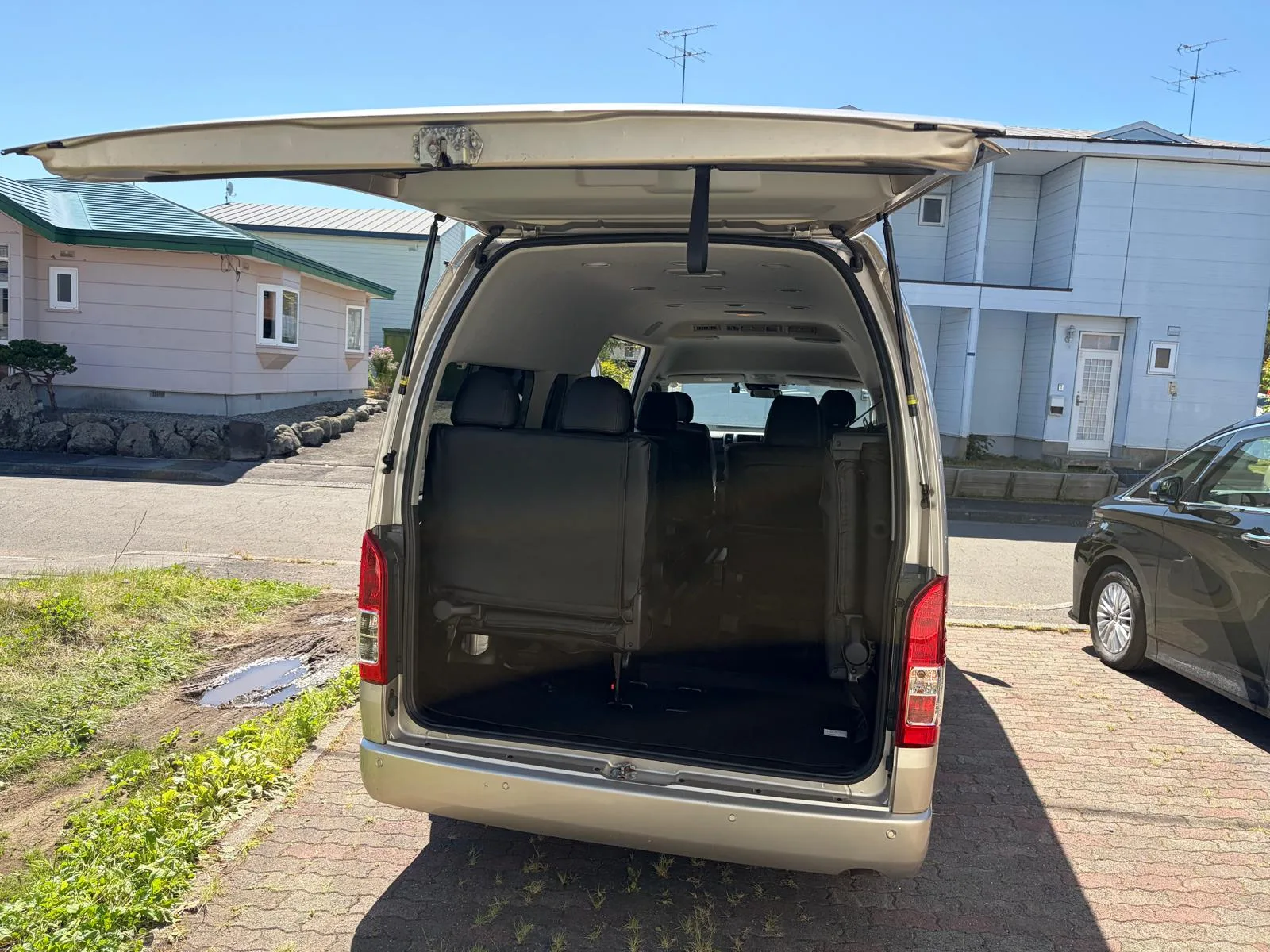
These are photographs of luggage areas, not a promise that every bag list fits. Seat use and the vehicle allocated for your date determine capacity.
Meals, naps and accessibility make the itinerary work
Put lunch on the route before everyone is hungry. If the children have a usual nap window, avoid scheduling the only must-see stop during that time. Build in a café, indoor attraction or quiet stop as a fallback. If you need a high chair, allergy-aware meal or a restaurant that can welcome a large party, check directly with the venue; a driver can recommend places but cannot guarantee a table.
Share mobility needs privately when requesting the route: stairs, uneven ground, a folding wheelchair or the distance someone can comfortably walk. This lets the operator discuss suitable pickup points and whether a proposed stop is realistic. Do not assume every attraction or vehicle is accessible merely because it appears on an itinerary.
A useful family day often ends earlier than an adult-only day. Keep one unplanned hour to absorb traffic, a long lunch or a child who wants more time at the first stop. That buffer is part of a good itinerary, not wasted time.
Leave more breathing room in winter
Snow, cold and shorter daylight can change travel time and the way children enjoy a stop. Keep outdoor visits shorter, make warm indoor breaks part of the plan, and avoid a tight connection to a flight. For a ski holiday, provide the exact Niseko hotel address and the number of ski bags. Read the Niseko destination guide and the airport-to-Niseko comparison when planning the transfer.
Check each attraction’s current opening days and activity rules. Do not promise a snow or flower experience on a particular date: season and weather determine what you will actually see.
Family-trip costs: compare transport for your whole group
Start with the cost for the people travelling, then add what the quote leaves out. A rail journey means individual fares and possibly a taxi at either end. A rental means hire, fuel, tolls, parking, equipment and cover, as well as collection and return time. A private day is normally priced per vehicle, which makes the comparison different for two people and a multigenerational group.
HokkaVia’s published sightseeing rates below are for pickup and return in Sapporo, up to ten hours from pickup. They are route-area examples checked on 19 October 2026, subject to date, availability, vehicle fit and the final written itinerary. The areas are separate day choices.
| Separate Sapporo-return day | Alphard Apr–Nov / Dec–Mar | HiAce Apr–Nov / Dec–Mar |
|---|---|---|
| Sapporo / Jozankei | ¥50,000 / ¥55,000 | ¥60,000 / ¥60,000 |
| Otaru / Yoichi | ¥55,000 / ¥60,000 | ¥65,000 / ¥65,000 |
| Biei–Furano area | ¥65,000 / ¥70,000 | ¥75,000 / ¥85,000 |
For example, an April–November Otaru day at ¥55,000 is ¥13,750 per person when four people share the vehicle. Six guests sharing a suitable HiAce at ¥65,000 would divide the vehicle charge to about ¥10,833 each. These are arithmetic comparisons, not child fares or all-inclusive holiday prices. Restaurant bills, attraction admissions and guest accommodation remain separate.
The published sightseeing vehicle rate includes the driver, fuel, tolls and parking for the agreed route. Check the final quote for child seats, changes and anything exceptional. Overtime is published at ¥5,000 per thirty minutes; it is better to shorten the optional programme than discover that an extra activity has pushed the whole day beyond the booked hours.
An overnight route is quoted day by day and may add driver accommodation, currently from ¥15,000 per night depending on location and availability. It does not make the guest’s hotel part of the car price. The site’s payment guidance distinguishes vehicle payment to the driver in Japanese yen from driver-accommodation payment at booking. Read the current price and cancellation information, and confirm the exact terms in writing.
A useful saving can be booking a driver for the countryside day and using city transport on the other days. Paying for a car to wait while your family rests at a central hotel is not automatically good value. Ask for the legs you need, with the same dates, group and bag list when comparing offers.
What to send for a useful family-tour quote
- Travel dates and flight arrival or departure times.
- Pickup and drop-off hotels, or exact addresses.
- Adults, children’s ages and any child-seat needs.
- Suitcase sizes, stroller, ski bags and mobility equipment.
- One or two priorities for each day and a preferred pace.
- Any lunch, nap or accessibility considerations.
Ask for the vehicle, service hours, included route, extra charges and change policy in the written quote. Our price overview gives starting points; the actual amount depends on your dates and itinerary.
A practical family packing and arrival checklist
Keep the items you may need during the drive in one small bag accessible from the cabin: a change of clothes, familiar snack, wipes and any necessary personal supplies. Put the rest in the luggage area. A ten-minute comfort stop becomes much easier when the required item is not buried inside the largest suitcase.
For a hotel move, check the receiving hotel’s check-in time and bag-storage arrangements. A private car can take you to the property, but an early arrival does not guarantee an available room. If you plan luggage delivery, confirm the delivery date and acceptance with both hotels before reducing the luggage space booked in the car.
For arrival, send the flight number and the exact hotel name. Tell us whether the request is a direct transfer or a sightseeing day with stops; those are different services. On departure, plan from the airline’s airport requirements backwards and leave room for the conditions on your date. Avoid adding a long countryside excursion merely to fill the hours before a flight.
If you are still deciding, send the dates, children’s ages, suitcase and stroller list, overnight locations and two priority experiences. You do not need to invent a detailed timetable before asking. We can help assess a practical route and vehicle while you keep control of the pace.
Hokkaido family trip: frequently asked questions
How many places should we plan each day?
Start with one main activity and add a nearby optional stop. Distances, children’s ages, meal times and the season matter more than a fixed attraction count.
Is a private car always better than the train?
No. A direct train can work well between cities with light luggage. A private car is useful for door-to-door travel, several scattered stops, child seats or a larger bag list.
Can we request a child seat?
Tell us each child’s age when requesting a quote. The suitable seat and vehicle arrangement must be confirmed before booking; do not rely on a generic passenger-capacity figure.
Can Sapporo, Otaru, Asahikawa and Furano fit in one day?
That would be too rushed for most families. Choose a city day, or add an overnight stay for a countryside route. Actual feasibility depends on flight times, weather and agreed service hours.
Can a tour be adjusted if a child needs a break?
Discuss flexibility before booking. Breaks can usually be planned within the agreed service hours, while major route changes, extra distance or time may affect the quote.
Should we stay in Sapporo or move hotels?
Sapporo works as a base for city days. An overnight stay near Furano, Biei or another distant area may make the countryside less rushed. Choose based on your flight times and the places that matter most.
Can a stroller go on JR trains?
JR Hokkaido permits strollers without a charge. Fold and store them so they do not obstruct others, and check the current official luggage advice for your train.
Does a charter quote include tolls and parking?
Inclusions vary by route and operator. Ask for service hours, tolls, parking, child seats, waiting, overtime and any overnight driver costs to be stated in writing.
Planning sources and date
Reviewed by the HokkaVia planning team. Updated 19 October 2026. Timetables, fees and operating conditions can change; use the linked operators for your travel date. Itinerary time blocks and shared-car calculations are our planning examples.
Attraction details and road conditions change. The official links below are useful for checking your travel date; route and vehicle availability are confirmed in a written quote.
- Hokkaido Tourism Organization: Asahiyama Zoo
- Hokkaido Tourism Organization: Shikisai-no-Oka
- HokkaVia: vehicle and luggage information
- HokkaVia: price overview
- Hokkaido Tourism Organization: Otaru Canal
- Hokkaido Tourism Organization: Okurayama Observatory
- Hokkaido Tourism Organization: Shirogane Blue Pond
- JR Hokkaido: luggage and strollers
- Visit Sapporo: official seasonal itinerary ideas