HOKKAVIA · 14
Sapporo to Asahikawa: Trains, Zoo & a Realistic Day Trip
Travel from Sapporo to Asahikawa for Asahiyama Zoo, a good meal and a day that has room to breathe. Compare the whole journey, check the zoo calendar and choose between reserved-seat trains, the highway bus and a private HokkaVia vehicle.
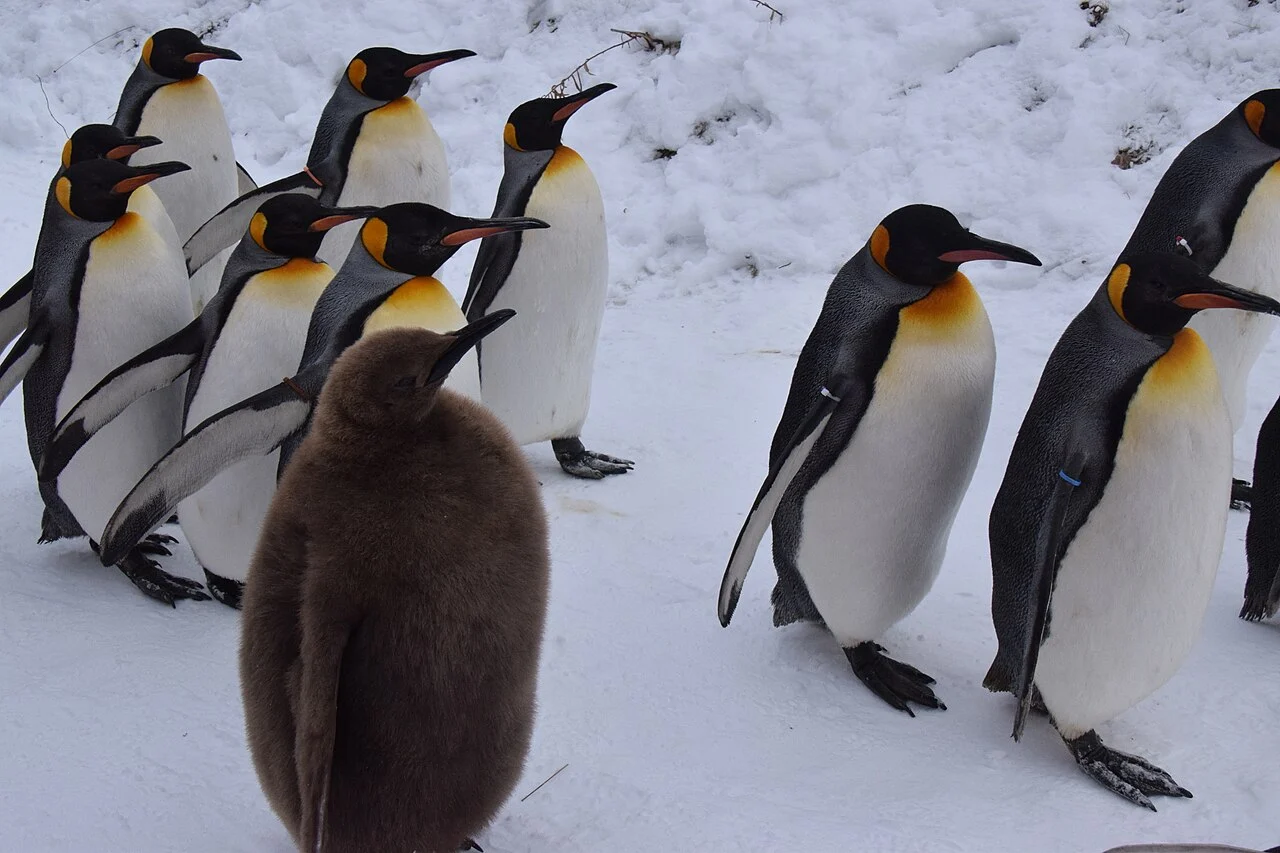

Is Asahikawa worth a day trip from Sapporo?
Yes—if you give the day one clear priority. Asahiyama Zoo with a relaxed meal is a realistic starting point. A city-focused visit built around ramen and one museum can also work. Trying to add the zoo, a complete Asahikawa city tour, Biei’s Blue Pond and Furano’s flower fields produces a very different, much longer itinerary.
The important distinction is between reaching Asahikawa Station and starting your visit at the zoo. A train journey of roughly 1½ hours does not include leaving your Sapporo hotel, finding the platform, waiting for the local zoo bus or the final 40–50-minute bus ride. Count those pieces in both directions before deciding how much sightseeing to add.
Choose a zoo-focused day if animals are the reason for travelling, especially with children. Choose a city day if you prefer ramen, a walk around the station and an indoor attraction. Consider staying overnight when you want both a substantial zoo visit and several outlying places, or when winter weather would make a long return feel rushed.
HokkaVia accepts enquiries for a private Sapporo–Asahikawa journey. We can assess your hotel, passengers, bags and priorities together, then confirm a feasible route and individual quote. A private vehicle simplifies the connections; it does not remove opening hours or winter road conditions.
Train, highway bus or private driver: compare the complete journey
Use the same endpoint for every option. A ticket to central Asahikawa is not a ticket to the zoo gate. For a fair comparison, add the local journey, waiting and the return connection instead of comparing the train’s station time with a car’s hotel-to-attraction time.
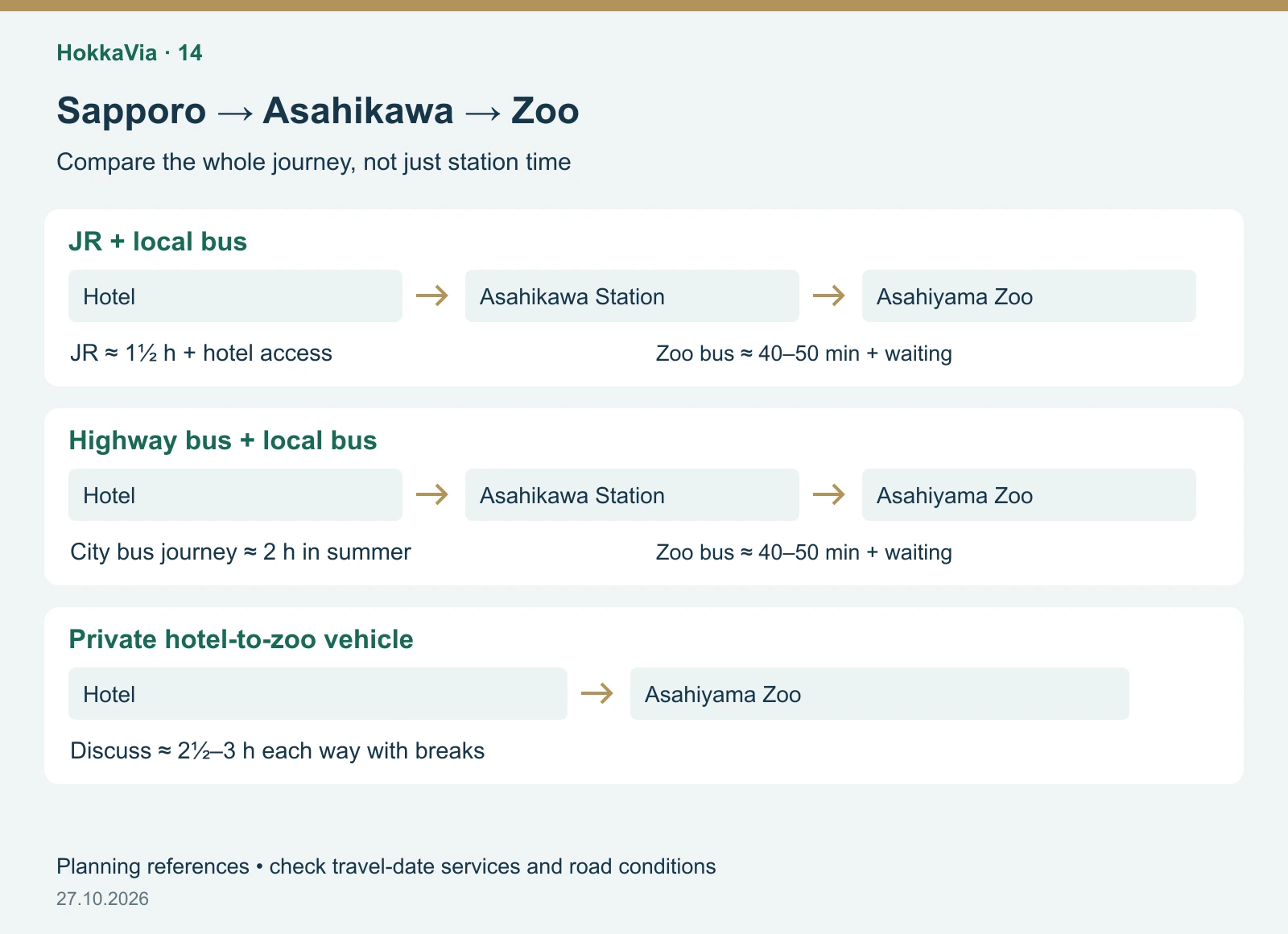
| Option | Planning time | Adult reference fare | Best reason to choose it |
|---|---|---|---|
| JR Lilac / Kamui | About 1½ hours, station to station; add hotel access and the zoo leg | ¥5,440 one way, ordinary reserved-seat example | A comfortable rail journey and a manageable local connection |
| Highway Asahikawa-go | About 2 hours in the published summer comparison; allow longer in winter | ¥2,500 one way; zoo travel is separate | A lower transport budget and flexible arrival time |
| HokkaVia private vehicle | Agree hotel-to-zoo timing; initially allow roughly 2½–3 hours each way with breaks and conditions | Individual vehicle-and-route quote | Hotel pickup, family bags and fewer transfers |
| Self-drive rental | Add collection, loading, parking and return to driving time | Rental, fuel, tolls, parking and cover | A wider driving holiday and an appropriately experienced driver |
These are planning references checked on 27 October 2026, not promises for a particular departure. Public fares are per adult; a private quote is for an agreed vehicle and service. Road estimates include a more cautious planning allowance than a map’s fastest uncongested route.
Sapporo to Asahikawa by train: what changed in 2026?
Lilac and Kamui are limited express trains, with all seats reserved
The usual rail choices are JR’s Lilac and Kamui limited express services. This is a conventional railway journey, not a Shinkansen route, even when a booking website uses “Shinkansen” in a general ticket heading. Select the actual train, travel date and seat arrangement shown by JR.
From 14 March 2026, these services became all-reserved. You need the basic fare and the appropriate reserved-seat limited express ticket. Older articles recommending a non-reserved carriage or treating a seat reservation as an optional extra describe an earlier arrangement. Do not build a current itinerary around that advice.
JR’s regular-ticket table gives an adult ordinary reserved-seat Sapporo–Asahikawa example of ¥5,440 one way. The amount for your date, season, seat or ticket product can differ. Check the complete amount, rather than mistaking a discounted express supplement for the whole journey price.
Reserve the return journey as thoughtfully as the outward train
Choose a return train after allowing for the zoo bus, possible queues and a meal. Selecting the last possible connection leaves little room for a child who needs a break or an animal exhibit you want to revisit. Keep the reservation and the correct station name available offline, and check current disruption information before travelling.
JR announced that the old Asahiyama Zoo Ticket and Zoo Access Ticket stopped sales on 10 March 2026, with final use on 13 March. A guide advertising those discontinued packages should not be used as today’s buying instructions. Compare current individual tickets and any rail pass for which you actually qualify; a pass is not automatically good value for one return trip.
If travelling with a rail pass, read that product’s eligibility and seat-booking rules. Do not assume an overseas-visitor pass applies to a Japanese resident, or that a ticket quoted in your home currency includes the same conditions as JR’s regular JPY fare.
Asahikawa Station to Asahiyama Zoo: the connection that matters
Asahiyama Zoo is on the outskirts, rather than beside Asahikawa Station. The zoo’s access guidance identifies station bus stop 6. The operator’s published 2026 summer timetable includes routes 41 and 47; typical listed journeys take roughly 40–50 minutes. Check the destination on the actual departure and the current seasonal timetable.
The adult single fare is ¥670, and the child fare is ¥340, following the 1 September 2026 revision. That is a separate local bus fare. JR’s rail fare or a rail pass should not be assumed to cover it. The operator lists Asaca and DoCARD for its local IC payment system; do not assume the Suica or other card that worked in Sapporo works here. Prepare a suitable payment method or check the operator’s current ticket-vending guidance.
At our review date, the linked summer timetable runs through 3 November 2026. It is useful for that period, but it is not a confirmed winter timetable for a December trip. Some departures or destinations can change when the zoo is closed. Recheck the travel date before copying a departure time into your plans.
Plan the way back before entering the zoo
Find the relevant return stop, check the last useful bus and allow for boarding demand. The bus timetable, zoo closing time and your reserved train are three different constraints. An afternoon zoo departure that looks convenient may still leave a rushed station connection once queues and traffic are included.
A taxi for this final leg can be an alternative for some groups, but availability and its actual fare need confirming. Do not assume a waiting taxi, a child seat or room for every large case. If the whole day needs an agreed vehicle, discuss a private itinerary before travelling rather than leaving an essential connection to chance.
The highway bus to Asahikawa: useful, with a separate zoo leg
The Highway Asahikawa-go provides another city-to-city option. The official 2026 notice lists an adult single fare of ¥2,500. The service is non-reserved: check the current operator guidance for queuing, boarding and what happens when a departure is full.
Read the precise Sapporo boarding point on the operator’s map. Redevelopment and temporary stop arrangements mean that a general reference to “Sapporo Station Bus Terminal” in an older article is not enough. Give yourself time to find the actual stop, particularly if carrying bags or travelling in snow.
Allow about two hours as a summer city-to-city comparison and additional time for winter road conditions. Then add the transfer to the local zoo bus. A cheaper highway ticket is helpful only when the remaining connections still leave the visit you want. For a short winter day, a later city arrival can consume a significant part of the zoo’s opening window.
Read the current luggage conditions before relying on the luggage hold for unusual items. Small carry-on bags and large sports cases are different requests. Keep medication, valuables, a warm layer and children’s essentials with you. If you are comparing a return discount, verify its validity and conditions; the budget examples below deliberately use two ordinary singles.
A private Sapporo–Asahikawa day with HokkaVia
A private driver is particularly useful when the difficult part of the day is moving a group from the hotel to the zoo with children, coats, a stroller or several bags. We arrange the vehicle around the full load and your actual pickup address, rather than asking everyone to meet at a public departure point.
Start with a realistic service plan: a substantial zoo visit, a meal and, if time permits, one short city stop. Tell us if the journey ends in an Asahikawa hotel instead of returning to Sapporo. A one-way sightseeing transfer and a same-day return are different services and need different quotes.
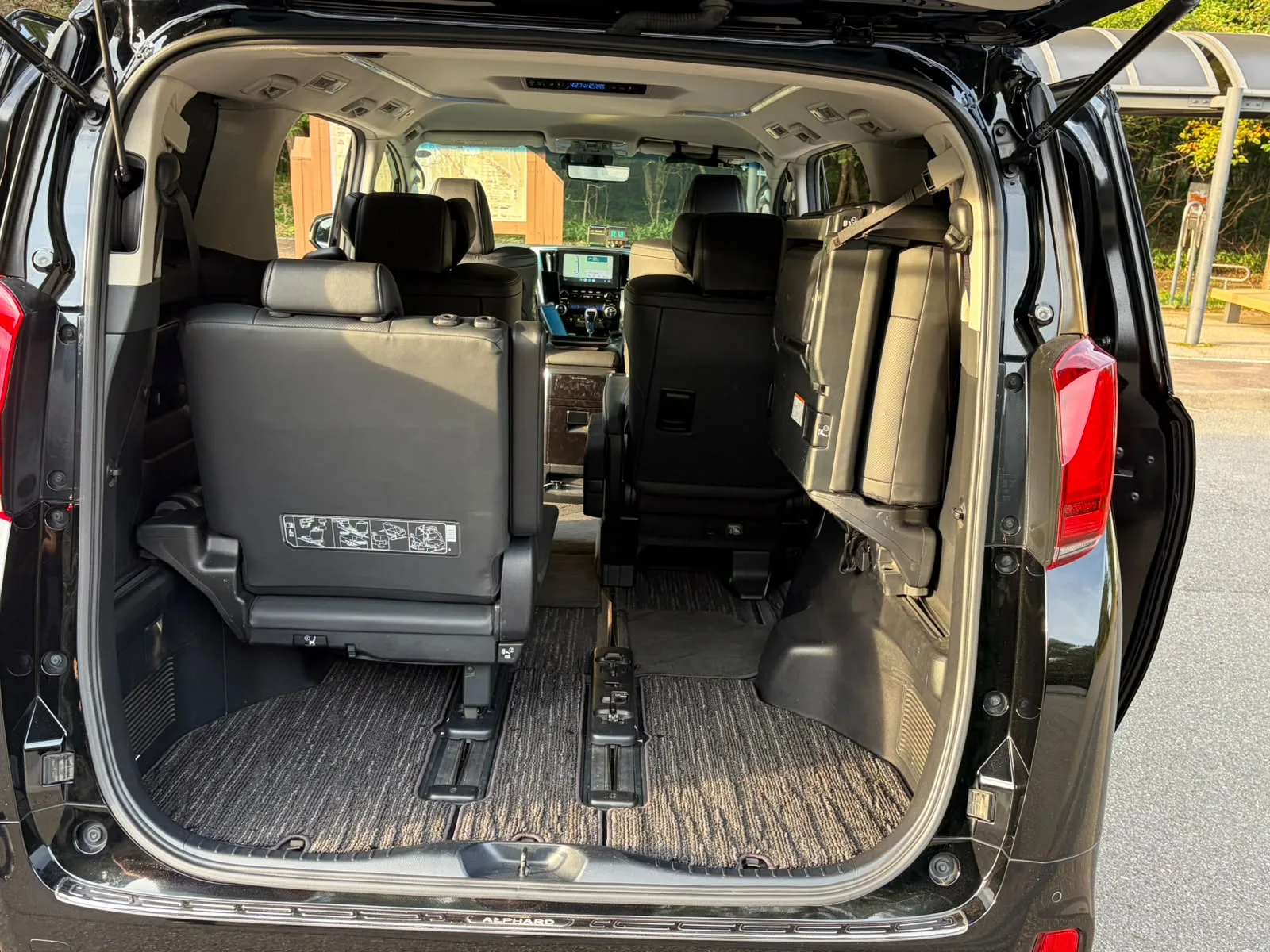
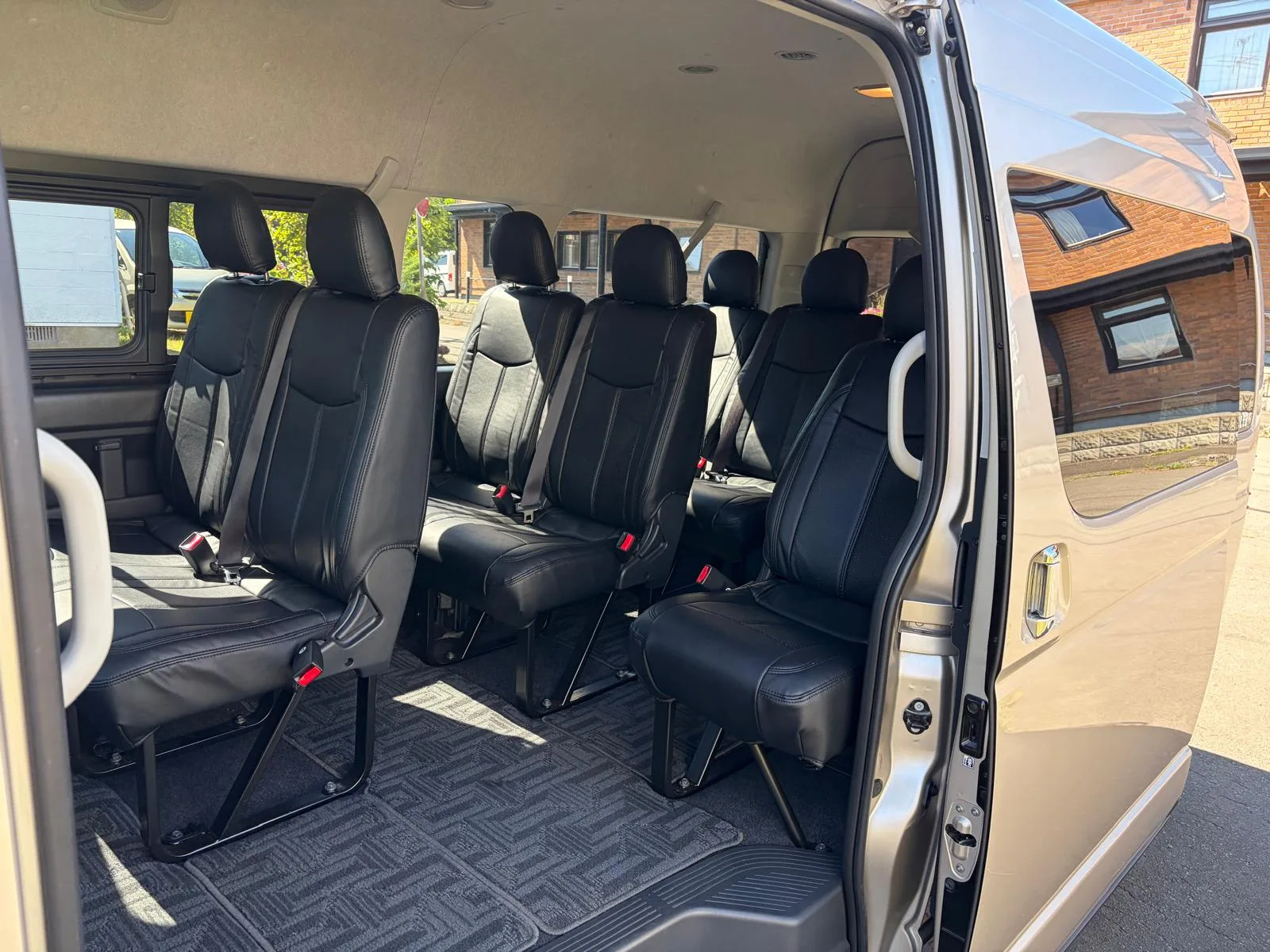
Choose the vehicle for bags as well as seats
An Alphard can suit a smaller party, while an appropriate HiAce configuration may be better for more passengers or luggage. Maximum seating is not the same as comfortable capacity with cases. Share the number and sizes of bags, the stroller’s folded size, any mobility aid and children’s ages before confirming a vehicle.
The written quote should identify the agreed route, service duration and inclusions. HokkaVia’s current day-tour conditions allow up to 10 hours from pickup, with overtime charged according to the published conditions. A long winter journey can use much of that allowance even before adding Biei. We will assess the itinerary; requesting a stop does not make it automatically included.
Confirm the driver’s language and any guiding requirement. Trip-planning support and transport are different from a fluent guided museum or zoo tour. Drivers cannot guarantee an animal appearance, a particular penguin-walk session or unrestricted waiting through a road closure. Keep those expectations explicit when agreeing the day.
Zoo opening dates, admission and the November closure
Check the date before booking transport. For the approaching seasonal change, the zoo’s official 2026 information lists these dates. A private car or rail ticket cannot turn a scheduled closure into an available zoo visit.
| 2026 period | Opening hours | Last admission |
|---|---|---|
| 16 October–3 November | 09:30–16:30 | 16:00 |
| 4–10 November | Closed for the seasonal change | — |
| Winter opening from 11 November | 10:30–15:30 | 15:00 |
Winter closing days include 30 December–1 January. Check the official calendar for your exact year and date, including any special evening opening, instead of assuming a summer timetable applies throughout the year.
At the review date, ordinary adult admission is ¥1,000; children of junior-high-school age and below enter free under the published category. The city has announced an adult ordinary-admission increase to ¥1,400 from 29 April 2027. Resident, group and other special tickets have separate conditions. Use the price for the date and eligibility of your visit.
If you are travelling during the November closure, change the date or choose a city-focused route. Do not reserve the same zoo itinerary and assume another attraction can simply fill the gap without checking its access and opening day.
Two day-trip plans that leave time to enjoy the visit
The following are illustrative planning windows, not a train, bus or private-tour timetable for sale. Choose actual services for your date. They show how the connections change the day and why a zoo visit needs a protected block of time.
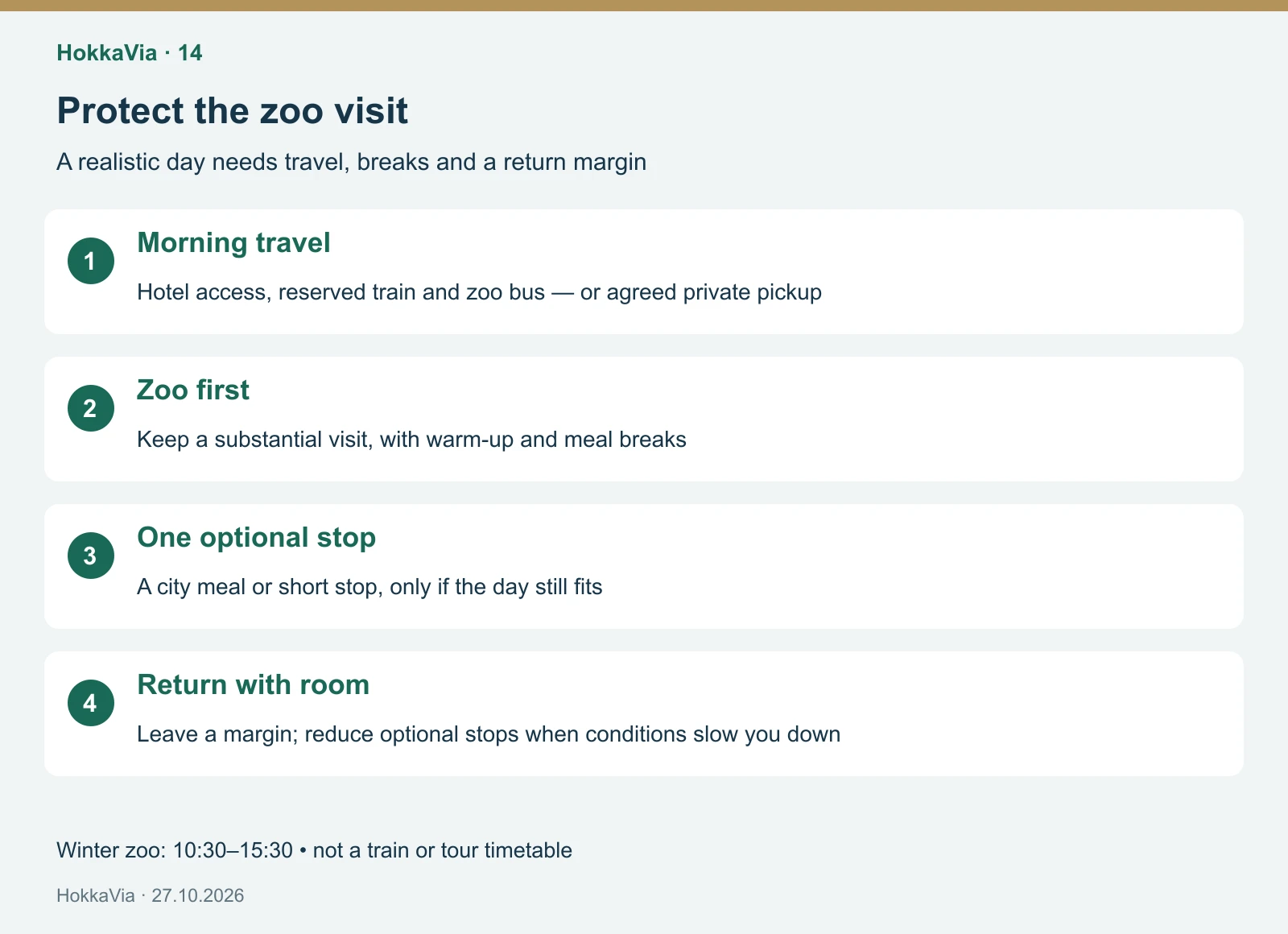
Plan A: train, zoo and a relaxed city meal
Leave your Sapporo hotel early enough to reach an outward limited express around the morning travel window you select. Add the station connection and roughly 40–50 minutes for the zoo bus. For a winter visit, aim around the 10:30 opening rather than assuming entry at the summer opening time.
Protect roughly three hours for your main zoo visit, including warm-up or lunch breaks as appropriate. Return to central Asahikawa in the early or middle afternoon, then choose a meal close enough to the station to make the return connection comfortable. Book a sensible late-afternoon train rather than placing a tight restaurant reservation immediately after arrival back in Sapporo.
This is a good plan for people comfortable managing two public-transport legs. If a preferred animal activity happens later, move the city meal or return train accordingly. A planning example should adapt to the day’s programme, not force the animals and buses to match an arbitrary spreadsheet.
Plan B: hotel pickup, a zoo visit and one optional stop
For a private vehicle, discuss a morning pickup and a road allowance initially around 2½–3 hours to the zoo, adjusted for the address, breaks and weather. Spend the central part of the day at the zoo. Add a meal or a short city stop if that still fits the agreed service time and leaves a useful return margin.
Keep the optional stop genuinely optional. If roads slow down or children need a longer break, shorten that part first. A full animal visit followed by every famous Furano and Biei location is a different itinerary, with much more road time. Ask for a longer touring plan or an overnight stay when that is the trip you actually want.
Winter, penguins and the daylight you cannot add back
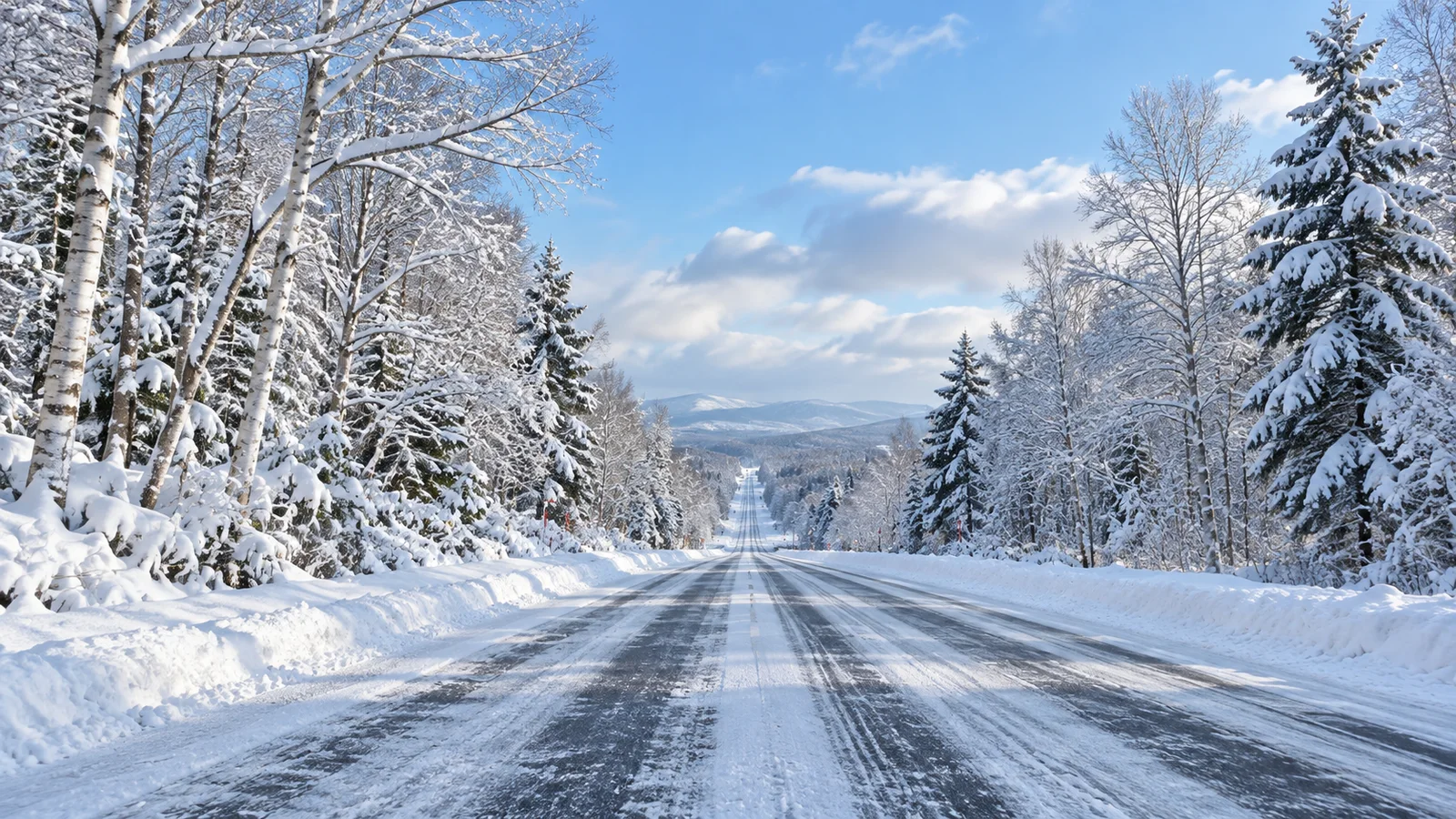
Asahikawa’s winter appeal is strong, but opening for the winter season does not mean the penguin walk is already running. The zoo explains that the walk needs sufficient snow for a safe course and is usually held from late December to mid-March. Snow, animal condition and the day’s arrangements can change or cancel it.
Check the zoo’s current announcement for your visit. Do not treat a previous winter’s start date or session times as the confirmed 2026–27 programme. If the walk is the main reason for travelling, consider whether an overnight stay gives you a less rushed visit, while remembering that a second day still does not guarantee the activity.
Wear warm layers, gloves and shoes suitable for slippery paths. Keep battery power for maps and tickets, and allow children regular indoor breaks. A long outdoor wait can be harder than the headline temperature suggests. Pack essentials where you can reach them without unloading all your cases.
Road snow can affect private vehicles and highway buses. Rail services can also be disrupted. Check transport conditions before leaving and keep a plan for contacting the hotel or changing an optional stop. Avoid making a same-day zoo excursion the essential connection before an international flight or other appointment with no room for delay.
How much time should you spend at Asahiyama Zoo?
For a first visit, reserve roughly three hours as a planning starting point, and allow more if you want a slow family visit, a meal and several animal activities. Two hours in a combined coach itinerary is not the same experience as a relaxed half day. Decide what matters before choosing the transport package.
Look at the current zoo map and the day’s information after arrival. Choose a few priority areas, then join them in a practical walking order. Penguins, seals, polar bears and other animals have their own needs and daily conditions; an exhibit’s name does not guarantee a particular animal behaviour at the time you arrive.
The zoo has slopes. Avoid assuming that the shortest line on a map is the easiest route for a stroller, an older traveller or someone using a mobility aid. Confirm any specific access requirement with the zoo and tell the vehicle operator about boarding assistance separately. A normal passenger vehicle is not automatically lift-equipped.
Food and rest breaks use visit time too. If you bring children or have a dietary restriction, decide whether to eat before entry, during the visit or after returning to the city. Do not make an essential late lunch depend on a restaurant you have not checked. The zoo’s current visitor guidance and map are more useful than an old screenshot of an attraction list.
Asahikawa city stops: choose one that fits the route
A bowl of Asahikawa ramen can be a satisfying finish to the day. Choose the restaurant around your return connection, its actual opening hours and your party’s needs. A central restaurant near the station and the outlying Ramen Village are different journeys; do not treat them as interchangeable pins beside the zoo.
Heiwa-dori shopping street can provide a gentle station-area walk when time, weather and everyone’s energy allow. The Asahibashi area, a museum or an Otokoyama visit can make sense on a city-focused day, but each needs its own access and opening check. A garden is particularly seasonal; do not insert a summer garden visit into a winter itinerary simply because it appears in a year-round list.
If you choose a sake-related stop, the person driving must not drink. Ask about the current visitor arrangements and whether any part needs a reservation. A private driver can handle the transport, while the facility’s own admission, tour and language conditions still apply.
For a day when the zoo is closed, build the route afresh around two or three verified city interests rather than trying to imitate the closed attraction. If your main aim is simply a relaxed meal and shopping, compare staying in Sapporo too. The best day trip earns its road or rail time with the things you personally want to see.
Can you add Biei or Furano to an Asahikawa day?
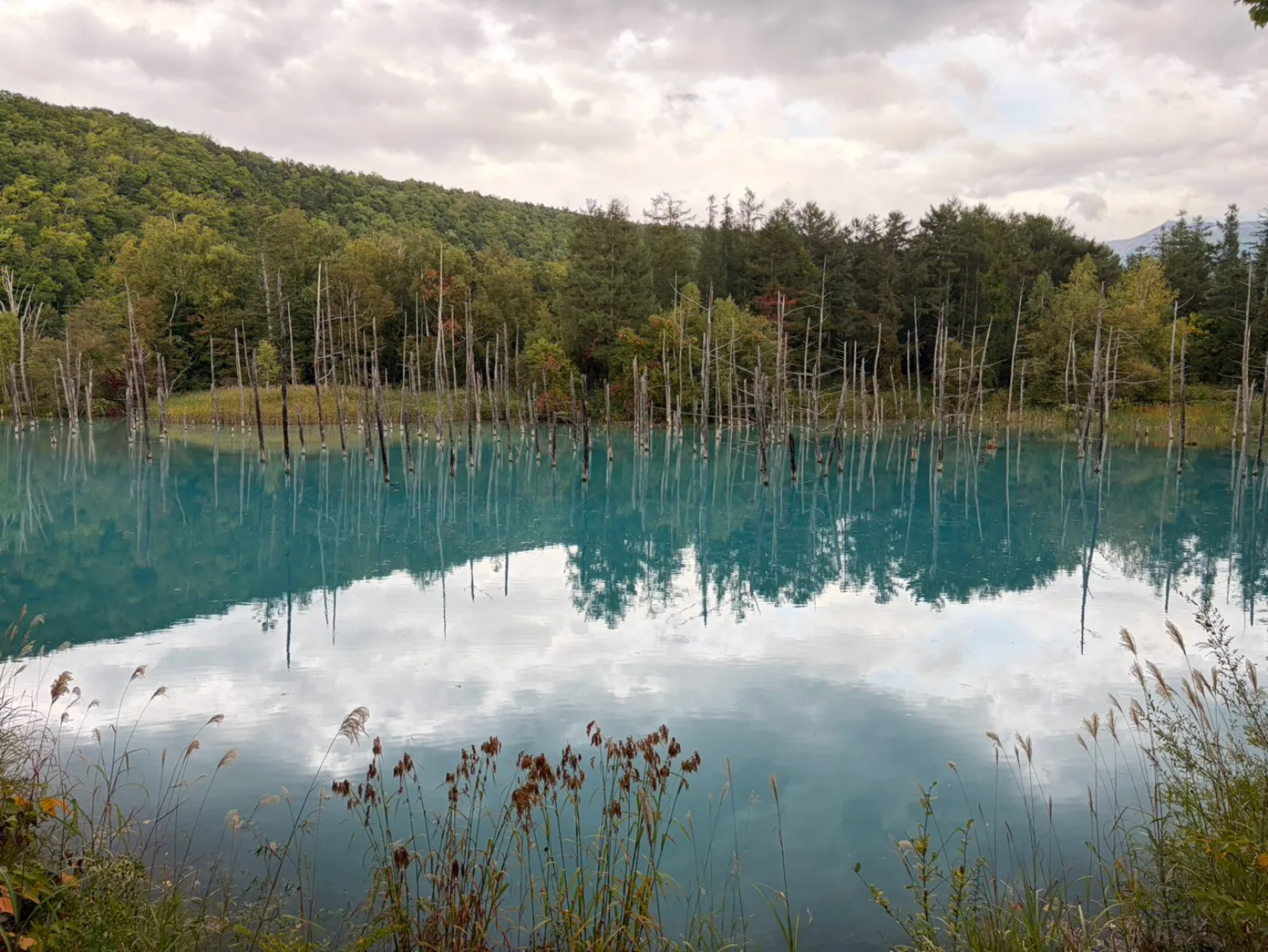
Sometimes, but start by choosing the priority. Biei and Furano are separate areas south of Asahikawa, and the Blue Pond is not outside the zoo gate. Travel between them, time at each attraction, meal stops and the return to Sapporo all belong in the same day-length calculation.
If the zoo is the main event, protect that visit and ask whether one Biei stop remains sensible. If flower fields and the countryside are the main event, use a dedicated Furano–Biei day or stay overnight nearby. Summer daylight helps, but it does not make distances disappear. Winter roads and the shorter zoo window leave fewer choices.
Public transport adds connections and service intervals. Do not assume that reaching Asahikawa by a fast train makes a chain of rural attractions equally straightforward. A private car can reduce the transfers, yet a route still needs enough time for actual visits instead of becoming an all-day drive with brief photo stops.
See our Furano and Biei day-trip guide for a separate countryside plan. If you want to continue to a new hotel, describe that as a one-way touring route when requesting a quote. It is different from a normal Sapporo return day.
A complete adult budget: include the local bus and zoo ticket
Use JPY amounts to compare the actual components. Booking-platform quotations in dollars or other currencies can include different dates, discounts or conditions. The following arithmetic uses current ordinary adult examples, two single journeys and the current ¥1,000 zoo entry. It is not a ticket package or a guaranteed price for your date.
| One adult, same-day return | JR route | Highway-bus route |
|---|---|---|
| Sapporo–Asahikawa, two singles | ¥10,880 | ¥5,000 |
| Station–zoo local buses, two singles | ¥1,340 | ¥1,340 |
| Current ordinary zoo admission | ¥1,000 | ¥1,000 |
| Example total | ¥13,220 | ¥7,340 |
Two adults would total ¥26,440 or ¥14,680 on the same assumptions. Food, hotel-to-station travel, seat or fare changes, optional taxis and other attractions are excluded. Children need their applicable rail and bus fares rather than a simple half of the complete adult total, because zoo admission follows a different age category.
From the announced 29 April 2027 adult zoo increase, this particular example would add ¥400 per adult if the other components were unchanged; recheck all transport prices at that time. Current rail passes and valid discounts can change the arithmetic, but only use them when you qualify and have checked the purchase conditions.
For a private car, compare your written vehicle total with the complete cost for your actual party. Verify whether meals and admission are excluded, and confirm the route, service duration, luggage, child seats and overtime conditions. Do not divide a generic maximum seat count into a quote before confirming that your group and bags fit.
Children, luggage and access: details that change the best option
A family’s easiest route is not always the option with the shortest station time. Count how often the group needs to carry bags, fold a stroller or wait outside. If young children will be tired after the zoo, an agreed hotel return may matter more than saving a few minutes on the long-distance leg.
Share children’s ages and any restraint requirements with the private-vehicle operator before booking. Include the stroller, large cases and mobility equipment in the capacity discussion. A child seat occupies space; maximum passenger capacity does not guarantee the same bag allowance in every layout.
If someone needs boarding help, a low walking distance or regular comfort breaks, explain that early. The zoo’s terrain and the vehicle entrance are separate access questions. Ask the relevant provider about each rather than assuming an image of a spacious cabin proves that all requirements are covered.
For an overnight move with luggage, check whether your accommodation can hold bags and whether the selected transport can carry them. A private vehicle remains available only for the agreed service period. It should not be treated as unlimited luggage storage after the trip finishes.
Keep the return plan accessible offline, including the station or hotel name in Japanese, your booking details and a contact method that works in Japan. Keep the first evening after returning flexible. That small decision makes a long day less fragile if the weather, a bus queue or a child’s energy changes the pace.
Ask HokkaVia to plan your Asahikawa private journey
Send your travel date, Sapporo pickup hotel, return or onward hotel, all passengers and bags. Tell us whether the zoo is the priority, whether you hope to see the penguin walk and which one additional stop matters most. We will check a feasible route and provide an individual quote.
- Exact pickup and final drop-off addresses, with any separate reception point.
- Adults, children’s ages, child-seat needs and access assistance.
- Suitcase sizes, stroller and other large equipment.
- Preferred zoo visit length, meal break and optional city or Biei stop.
- Any fixed deadline; please flag a flight rather than treating it as an ordinary hotel return.
Confirm the vehicle, itinerary, service time, inclusions, payment conditions, cancellation terms and driver language before booking. Sending an enquiry requests availability and a quote; it is not an instant reservation.
When an overnight stay is the better Asahikawa plan
Stay overnight if you want the zoo at an unhurried pace plus several city interests, if you are continuing to Biei or Furano, or if winter road risk makes a long return undesirable. A second day also avoids treating every meal and activity as a connection between transport departures.
Asahikawa Station is a useful base for a rail-centred city visit. A property elsewhere may suit another itinerary, but check its practical access with your bags. The hotel’s address still matters when planning a zoo trip or a transfer onward; “Asahikawa” covers more than the station district.
If you have only a short Hokkaido stay, compare the opportunity cost. A zoo day is worthwhile when that visit is important to you. If your priority is Sapporo food and neighbourhoods, you may prefer to spend the day there and choose a closer excursion another time. Our Otaru day-trip guide offers another route to compare.
The most useful plan is the one that fits your date, interests and energy. Choose the main visit first, solve the complete transport chain, and add only the stops for which the day still has room.
Sapporo to Asahikawa: frequently asked questions
Can I visit Asahiyama Zoo as a day trip from Sapporo?
Yes. Reserve a full day and include the local journey between Asahikawa Station and the zoo. A zoo visit and a meal make a more relaxed starting plan than adding every Furano and Biei attraction.
How long is the Sapporo to Asahikawa train?
Allow roughly 1½ hours station to station for the usual limited express comparison, then check the actual service. Hotel access, waiting and the zoo bus are additional.
Is this a Shinkansen journey?
No. Lilac and Kamui are JR limited express services on a conventional railway. Check the train named on the booking rather than a general platform heading.
Are there non-reserved seats on Lilac or Kamui?
All seats became reserved on 14 March 2026. JR requires the basic fare and the appropriate reserved-seat limited express ticket. Older non-reserved-seat instructions are outdated.
Does the old Asahiyama Zoo Ticket still exist?
JR announced sales ending on 10 March 2026 and final use on 13 March 2026. Compare current tickets and eligible passes instead of relying on the discontinued package.
Is the zoo open in early November?
The official 2026 seasonal-change closure is 4–10 November. Winter opening begins on 11 November. Always check the calendar for your year and date.
Will we see the penguin walk in November?
Do not assume so. It requires sufficient snow and suitable animal conditions. The zoo describes the usual period as late December to mid-March, with details announced for the actual season.
How much is the local zoo bus?
The published adult single fare is ¥670 and the child fare ¥340 after the 1 September 2026 revision. Check the current timetable and payment method separately from your JR ticket.
Can we add the Blue Pond and Furano too?
Ask for a route assessment. A full zoo visit plus several distant sights can turn into a rushed, long driving day. One additional stop or an overnight stay is often a more practical comparison.
Can HokkaVia pick us up at a Sapporo hotel?
We accept private-journey enquiries with agreed hotel pickup and final drop-off, subject to availability and access. Send the full addresses, passengers, luggage and priorities for an individual quote.
Is a private driver also a tour guide?
Transport, trip-planning support and fluent guiding are different services. Confirm the driver’s language and any guiding or special assistance requirement in the written arrangement.
Should I book a same-day flight after the zoo?
A long return trip leaves exposure to road, rail and weather delays. Tell the operator about any flight, work backwards from airline reporting requirements, and consider moving the zoo visit to another day.
Official sources and review date
Fares and dates were checked on 27 October 2026. Use the linked operator’s current travel-date information before booking. Itinerary windows and road times are planning examples, not guaranteed arrivals.