HOKKAVIA · 19
Hokkaido 3-Day Itinerary: Sapporo, Otaru & Niseko
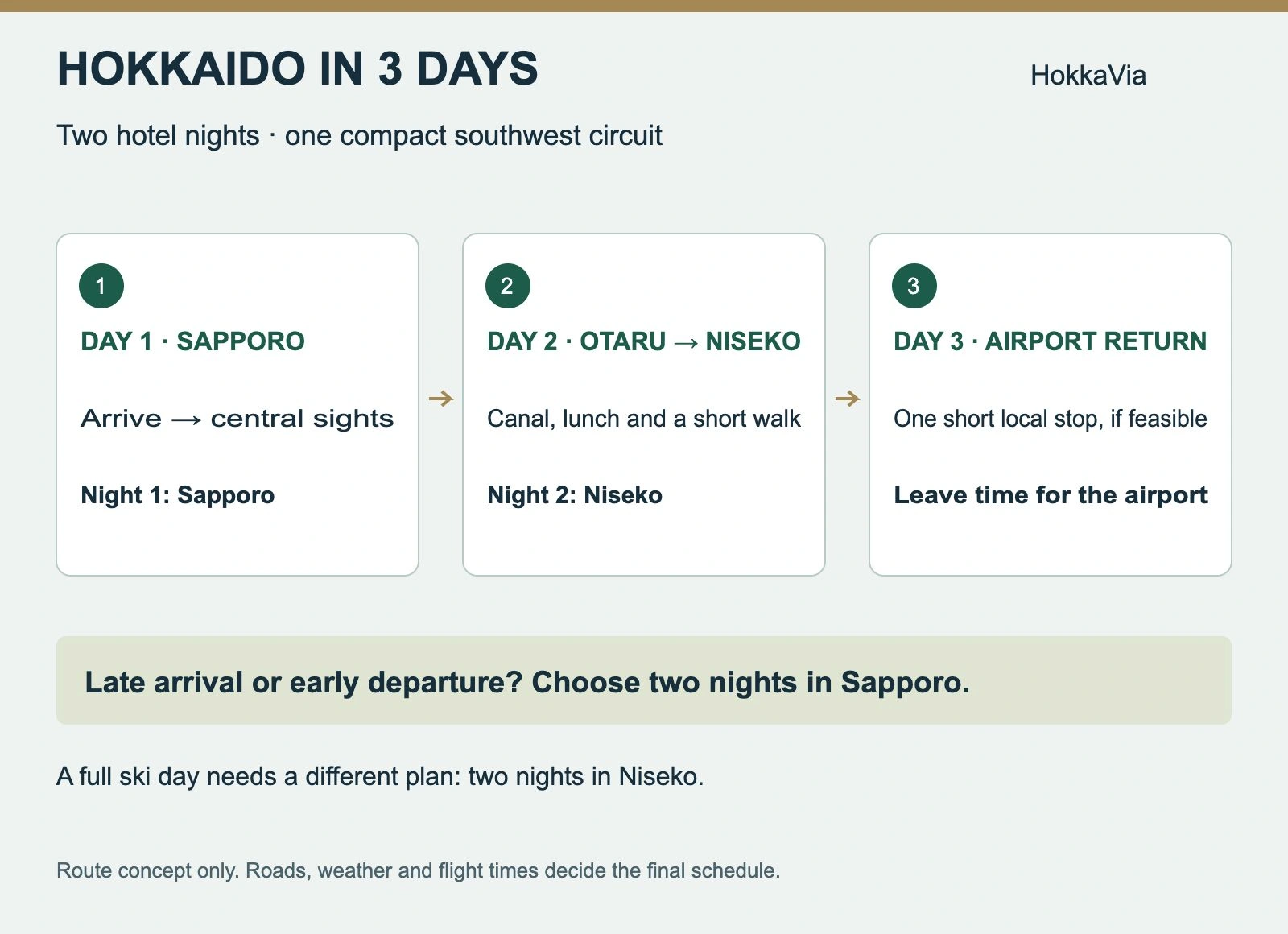
Three days can combine Sapporo, Otaru and a taste of Niseko, provided your flights leave enough time. The useful question is where to spend your two nights. This guide proposes one night in Sapporo and one in Niseko, then explains when staying in Sapporo is the better choice.

Does a three-day Hokkaido itinerary fit your flights?
Three calendar days are not three complete sightseeing days. Immigration, baggage collection, the journey from the airport and hotel check-in all use part of day one. On day three, work backwards from check-in and bag-drop requirements before adding activities. International travellers and visitors connecting through Tokyo should use the actual arrival and departure times at New Chitose, not the times on the first or last leg of a longer journey.
The two-hotel circuit works best when you reach Sapporo early enough for a relaxed afternoon and your final flight leaves late enough for a substantial road transfer from Niseko. It is less suitable for a late first-night arrival, an early departure, or travellers who want a full day of skiing. In those cases, remove a destination or add a night before booking hotels.
| Your priority | Two-night base | What to leave out |
|---|---|---|
| City food, shopping and an easy Otaru visit | Both nights in Sapporo | Niseko; keep day three close to the airport route |
| A varied short road trip and one resort night | Night 1 Sapporo; night 2 Niseko | A full ski day, distant flower fields and late Otaru sightseeing |
| A proper ski day or a slower resort stay | Both nights in Niseko | The Sapporo–Otaru sightseeing circuit |
Already spending nights elsewhere in Hokkaido? Use this as a three-day segment, and tell your planner the real starting and finishing hotels. The broader Hokkaido itinerary guide helps compare longer stays.
Day 1: arrive, settle in and enjoy Sapporo
Keep the arrival afternoon compact
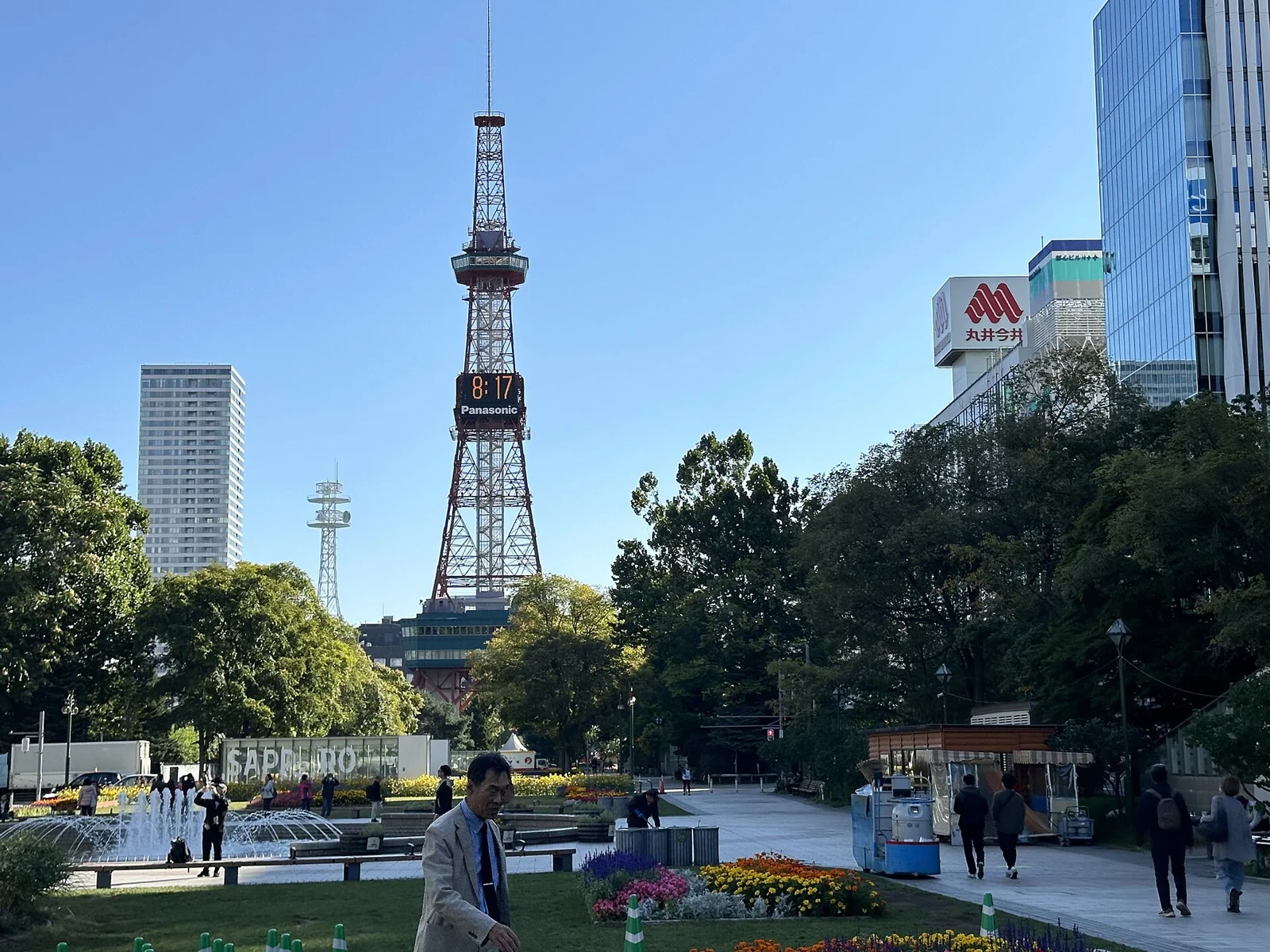
After dropping bags at your Sapporo hotel, connect Odori Park, the outside of the TV Tower and the Clock Tower area on a short city walk. Choose a proper lunch or café break before adding more sights. If you arrive late, make dinner and a brief stroll the whole plan; there is no need to recreate a full morning itinerary after an afternoon landing.
JR Hokkaido lists the fastest New Chitose Airport–Sapporo station journey as 33 minutes on a Special Rapid Airport service; Rapid Airport services take as little as 37 minutes. These are train running times, not aircraft-door-to-hotel times. Add terminal walking, waiting, station exits and your hotel transfer. A prebooked private transfer can reduce luggage handling, while a central walking afternoon usually needs little vehicle time.
Choose one evening, rather than several
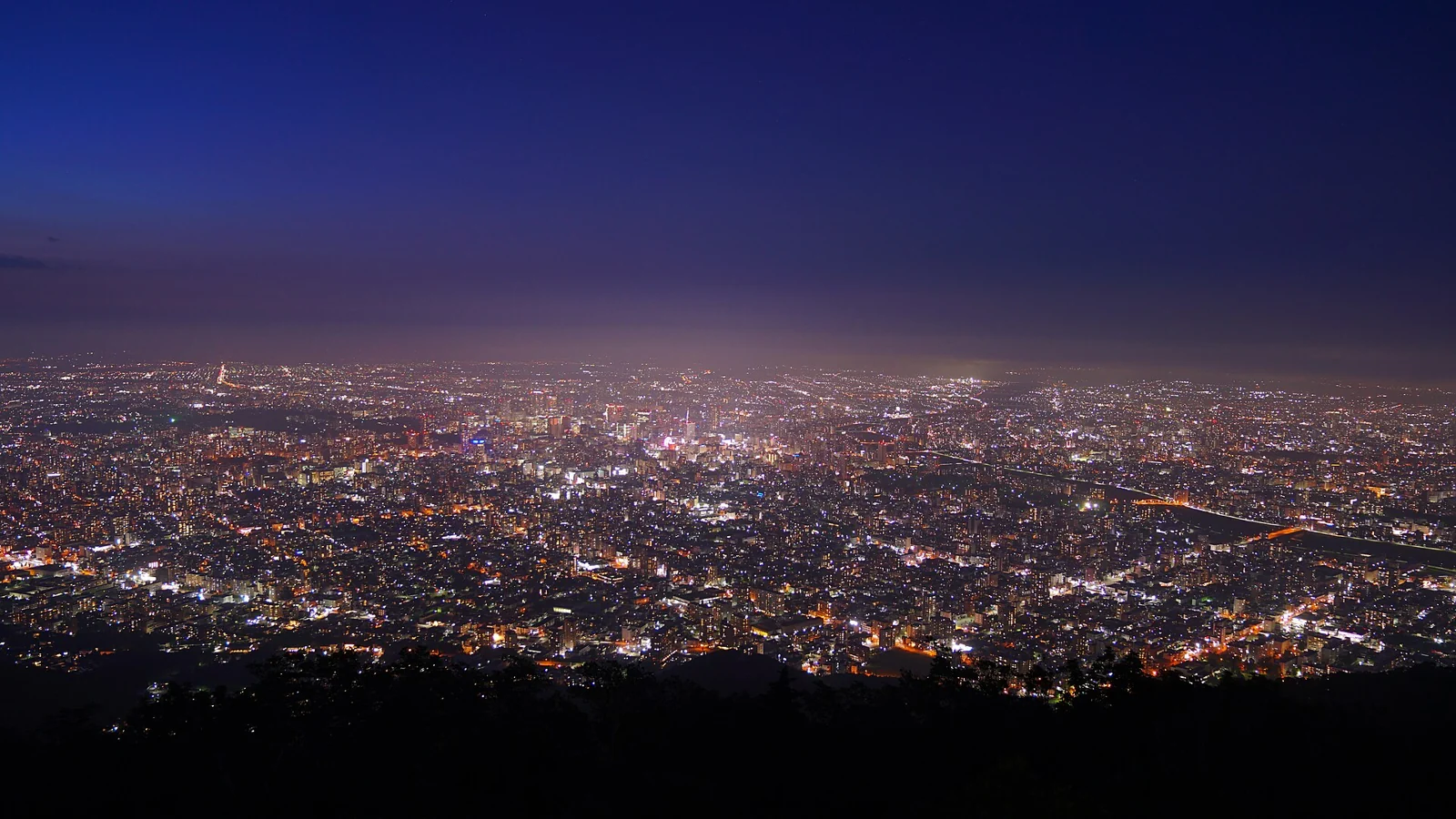
Soup curry, miso ramen, seafood or jingisukan can anchor the evening. Reserve a restaurant if it is a priority, and keep an alternative: a queue can use up a short sightseeing window. Mount Moiwa is an optional night-view outing when visibility and ropeway operations are suitable. It is a separate excursion, not a five-minute detour from Odori. With children or tired travellers, stay near the hotel instead.
Sleep in Sapporo on night one and prepare the bags for departure the next morning. See our Sapporo guide and one-day private tour planning guide for city alternatives; you do not need to add every stop from either page.

Day 2: Sapporo to Otaru, then on to Niseko
Travel west through Otaru before continuing towards Niseko, rather than returning to Sapporo to collect luggage. A private vehicle is useful for this through-route: agree where bags are carried and what happens while you are visiting. With public transport, check the exact Otaru onward connection and the Niseko hotel’s last-mile arrangements before deciding that the same route will fit.
| Illustrative window | Plan | Keep flexible |
|---|---|---|
| 08:30 | Leave your central Sapporo hotel with luggage | Actual pickup depends on the road forecast and hotel location |
| Around 10:00–13:30 | Otaru Canal, a compact Sakaimachi walk and lunch | Choose a few shops; add indoor breaks and time for parking |
| Afternoon | Continue to your exact Niseko hotel | Allow a substantial driving block and weather margin; skip extra detours |
| Late afternoon / evening | Check in, rest and have dinner | Confirm hotel meal deadlines and restaurant reservations |
These windows show the shape of a day, not promised arrival times. Hokkaido’s official tourism sample gives about 90 minutes for a Niseko–Otaru road leg in ordinary conditions. For planning this through-day, leave roughly two hours or more between the end of the Otaru visit and a Niseko hotel arrival, then adjust for the particular hotel, breaks and winter conditions. Snow can require a much longer allocation or a different plan.
What fits in Otaru?
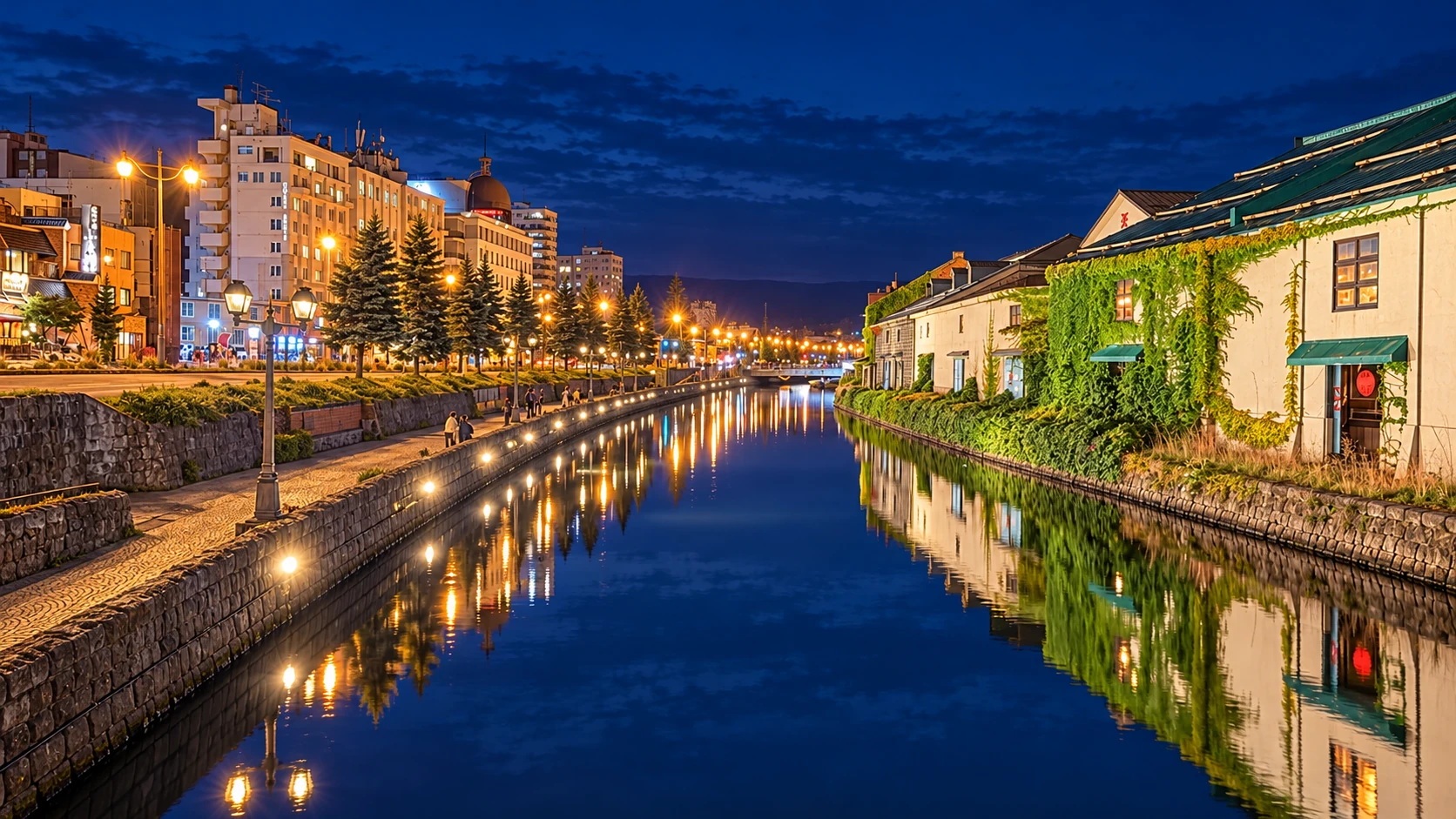
The canal warehouses, glass shops and music-box area make a satisfying short visit. Allow lunch and unhurried walking; this is not the day to promise the aquarium, a canal cruise, Tenguyama and a Yoichi distillery tour as well. If a reserved distillery visit is your main interest, replace other sightseeing and confirm the appointment and revised transfer time. Our Otaru guide has separate day-tour choices.
For a canal night view, stay overnight in Otaru or use the Sapporo-based alternative. Waiting until dark and then expecting a relaxed winter drive to a distant Niseko hotel changes this plan materially.
Day 3: a short Niseko morning and a realistic airport return
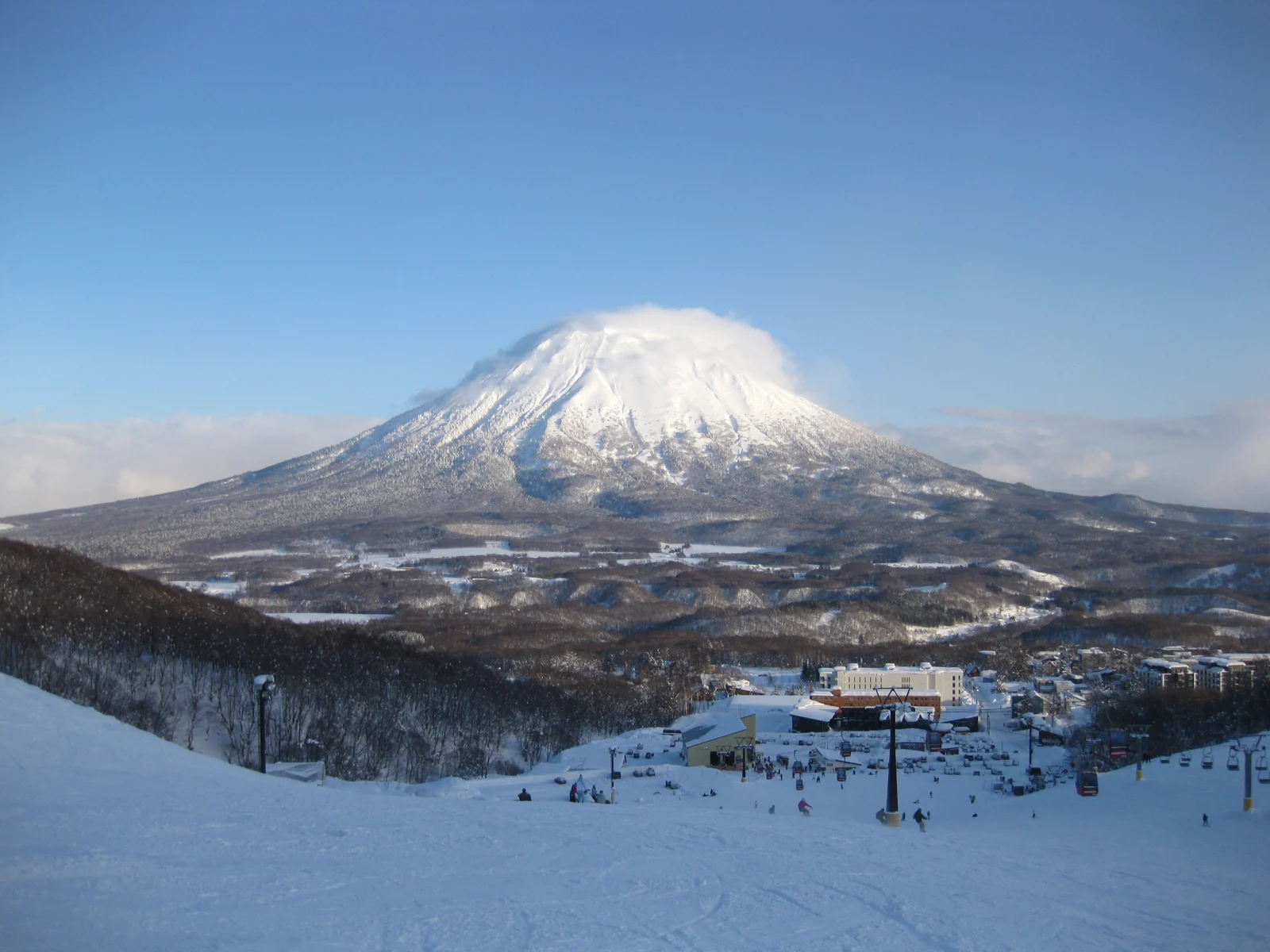
Niseko is a resort region, not a single pickup point. Hirafu, Hanazono, Niseko Village and Annupuri have different hotel locations and access roads. Give the complete hotel name and address when booking transport. A photograph of Mount Yotei, a dairy café stop or time at your hotel can make a gentle morning; do not promise a clear mountain view or a business being open without checking the date.
Niseko Tourism describes the airport bus journey as approximately three hours. Your hotel’s transfer may differ, and that figure is not a safe, fixed winter road allowance. Check the booked operator’s timetable, stops, baggage rules and meeting time. Do not plan an airport connection using only a map app’s shortest driving time.
Work backwards from the flight
For illustration, if a 19:00 flight requires you to target the terminal by 16:00, allocating four hours for your particular road journey and contingency means leaving the hotel by noon. The airline may require an earlier arrival; severe weather may make even that allocation unsuitable. This is a calculation example, not a transfer guarantee. A morning or early-afternoon flight is a strong reason to spend the previous night in Sapporo or near the airport instead.
Do not add a full ski session, a Lake Toya loop or last-minute outlet shopping to the departure day unless the full timing has been checked. Ask for a direct Niseko–New Chitose transfer plan and agree which optional stop is removed first if conditions deteriorate.

Where to stay: two Sapporo nights or one night in Niseko?
Two nights in Sapporo avoid repacking and leave more flexibility when the weather changes. Take JR to Otaru for a day, return for dinner and keep the last morning near your hotel. This is a complete short holiday even without Niseko. It suits food-focused trips, later arrivals and travellers who prefer one base.
One Sapporo night plus one Niseko night adds a resort stay and mountain scenery, but uses more time moving luggage and checking in. Confirm dinner availability and hotel arrival deadlines before reserving a remote property. A lower nightly room rate can be offset by a costly or awkward last-mile transfer.
For skiing, put both nights in Niseko: arrive and collect rental equipment when possible, ski on the middle day, then transfer out on day three. Book lessons, equipment and the appropriate lift pass separately unless explicitly included. A city-and-resort sightseeing itinerary does not automatically include a ski instructor, ski equipment or time on the slopes.
Train, winter bus, self-drive or a private car with driver?
| Transport | Useful for | Main limitation |
|---|---|---|
| JR + walking / subway | New Chitose–Sapporo and a Sapporo–Otaru day trip | Station walking, luggage and connections beyond Otaru |
| Reserved resort bus | Airport–Niseko transfer on operating dates | Fixed departure times, designated stops and onward hotel transfer |
| Private vehicle + driver | Otaru stopover between hotels; families and larger bags | Quote the whole route and service hours; a fluent guide is separate |
| Rental car | Travellers comfortable with the actual driving conditions | Winter driving, parking, fuel and one-way arrangements |
There is no direct JR train from New Chitose Airport to a Niseko ski hotel. Some Airport trains continue to Otaru, but not all do. If continuing beyond Otaru towards Yoichi, Kutchan or Niseko, JR Hokkaido says transport IC cards such as Suica cannot be used for that section; purchase the appropriate ticket before travel. Check train connections and arrange the station-to-hotel leg.
Resort shuttles do not replace an airport transfer with suitcases. Niseko United shuttle eligibility depends on the lift pass or payment; some rides can activate time on a valid hourly/day pass. Hanazono’s local guest shuttle does not permit large luggage. Read the rules of the exact service you intend to use, especially when changing hotels.
HokkaVia arranges private transport with professional drivers. Our English-speaking planning team supports the itinerary, while fluent English sightseeing commentary is not automatically included with the driver. Request a separate guide or essential language support in advance. Compare the vehicle guide and Sapporo–Niseko transport guide before choosing.
Winter, summer and the shoulder seasons need different plans
Snow season: fewer stops, earlier decisions
Short daylight, snow clearance and icy pavements affect the whole route. Keep the Otaru walk short, allow warm indoor breaks and take waterproof footwear with reliable grip. A professional driver can adjust to the conditions, but cannot guarantee a road remains open or a flight is reached. If the forecast threatens the return, discuss moving the final night closer to the airport before it becomes a same-day problem.
Snow on the ground does not mean every ski lift is operating. Annupuri’s announced 2026–27 season is planned for 28 November 2026 to 5 May 2027, subject to snow and conditions. Other resort areas have their own opening dates. For an early-November trip, do not assume that skiing will be available.
Green season and transition months
Longer daylight can make a countryside stop easier, but rafting, gondolas and outdoor tours run on their own calendars and may need advance booking. April, May and November can fall between operations. Select one confirmed activity rather than building the day around several seasonal assumptions. Keep a café, hotel break or indoor city option available.
Furano, Biei, Asahiyama Zoo and Hakodate are separate routing choices. Adding them to this southwest circuit makes a three-day holiday a different trip. Choose one region now and return for another on a longer stay.
Children, older travellers, luggage and easier boarding
Give the ages of children and the number, size and type of bags when requesting a vehicle. A seat-count maximum is not the same as comfortable capacity with suitcases, a stroller or ski equipment. Confirm child seats, luggage arrangements and hotel pickup access before accepting a quote.
For travellers concerned about high steps, including older guests, a vehicle with a powered boarding step can be arranged when available. The driver can offer a hand and support when boarding and getting out. Request this in advance so the suitable vehicle can be confirmed; a step is not a wheelchair lift. Explain any need to remain in a wheelchair or avoid walking so suitability can be checked individually.
On the Otaru day, prioritise accessible drop-off points, short walking sections and seated breaks. Carry medication, warm layers and daily essentials in a small bag you can reach without unpacking every suitcase. Keep enough time for toilets and meals throughout the transfer.
Budget for the actual route, not three copies of a city-day rate
A Sapporo city-day reference price is not a confirmed price for three days with a Niseko overnight. The quotation needs your dates, pickup and finish points, daily service hours, vehicle and luggage requirements. Ask whether tolls, parking, driver accommodation or out-of-town arrangements, return positioning and any overtime are included or charged separately. Do not assume a hotel package, transport quote and attraction ticket cover the same things.
| Budget item | How to compare fairly |
|---|---|
| Transport | Whole-vehicle total for this itinerary; compare with per-person rail/bus totals including last-mile transport |
| Accommodation | Two nights × rooms needed, with room occupancy, meals and applicable taxes checked |
| Food and stops | Meals, admissions, onsen use and optional activities, unless specifically included |
| Skiing | Lift pass, rental, lessons and any transport required for the selected resort |
| Changes | Agree alteration and cancellation conditions in the written quotation; do not infer them from another operator’s package |
Use the current HokkaVia prices and service information as a starting point, then obtain a route-specific quotation. The payment schedule and cancellation terms applicable to your booking should be confirmed in writing. This sample itinerary introduces no new deposit amount or cancellation rate.
Small planning decisions that save a short trip
For travellers arriving from Hong Kong, Singapore, the United States or Australia, the same local route needs different flight checks. An overnight international flight is not an extra sightseeing day, and a domestic connection in Tokyo can reduce the usable arrival afternoon. Tell the planner the New Chitose flight number and local landing time, and include the return terminal and any onward connection.
Arrange the evening meal at a Niseko hotel before leaving Sapporo if the property is isolated. If a special diet or allergy matters, confirm ingredients and preparation directly rather than assuming seafood or a vegetarian-looking dish meets your requirements. Keep the last airport shopping session subordinate to check-in, not the other way round.
The simplest packing arrangement is a small overnight bag plus the main suitcase. Decide before departure whether the vehicle stays with you, what service hours cover luggage carriage and whether any bags are stored by a hotel. Do not assume storage, an unattended vehicle or delivery service is included.
Ask HokkaVia to check your three-day route
Send your travel dates, New Chitose arrival and departure flights, hotel names, adult and child numbers, luggage and the one experience you most want. Tell us whether Niseko means skiing, an onsen stay or simply mountain scenery. We can then check the route and suitable transport instead of quoting a generic list of destinations.
State any need for a powered step, shorter walks, a particular child seat, dietary planning or a separate guide. Availability and the service scope will be confirmed before booking.
Hokkaido three-day itinerary FAQ
Can I visit Sapporo, Otaru and Niseko in three days?
Yes, as a compact sightseeing circuit if the flight times allow it: Sapporo on day one, Otaru en route to a Niseko overnight on day two, then an airport return on day three. It is not three full sightseeing days or a full ski holiday.
Should I stay in Sapporo for both nights?
Choose two Sapporo nights for an easier Otaru day trip, a late arrival or an early departure. One Niseko night works only after checking the transfer and flight requirements. For a full ski day, consider two Niseko nights instead.
Can I ski on the last day before flying home?
It depends on the actual flight, resort, equipment return and road conditions. This sample does not include a full ski session on departure day. A dedicated ski day in the middle of a two-night Niseko stay is easier to plan.
Is there a direct train to Niseko from New Chitose Airport?
No direct train takes you to a Niseko ski hotel. Rail journeys need appropriate connections and a last-mile transfer. IC cards cannot be used beyond Otaru towards Yoichi, Kutchan or Niseko; buy the correct ticket before that journey.
Can I add Furano, Biei or Hakodate?
Treat those as a different regional itinerary or add nights. Combining them with Sapporo, Otaru and Niseko in three calendar days leaves too much of the trip in transit, especially in winter.
Are lift passes, hotels and meals included with a charter?
Only items explicitly included in your written quotation are included. Ask for the whole-route transport price and separate hotel, meal, admission and ski costs so that per-vehicle and per-person figures are not confused.
Can you help someone who finds vehicle steps difficult?
Ask in advance for a vehicle with a powered boarding step and boarding assistance. The driver can offer a hand, but the vehicle and each traveller’s needs must be confirmed. A powered step is not a wheelchair lift.
Does a private driver provide fluent English guiding?
Fluent English sightseeing commentary is not automatically included. HokkaVia’s English-speaking planning team helps before travel. Tell us if a separate guide or particular language support is essential.
What if snow changes the route?
Stops and timing may need to change, or a road transfer may become unsuitable. Check the forecast and discuss the final hotel location and airport contingency beforehand. Payment, changes and cancellation terms are those confirmed for your reservation in writing.
Sources & travel-date checks
Transport and seasonal facts were checked against the official sources below on 6 November 2026. The timetable is a planning example, not a guaranteed transfer time. Confirm operating days, bookings, weather and your airline’s requirements for your actual dates.