HOKKAVIA · 23
Hokkaido Summer Itinerary: Flower Fields & Scenic Drives
A good summer route follows the flowers that are actually blooming, rather than a collection of photographs taken in different months. This six-day plan combines Sapporo with two nights in Furano, leaving a full countryside day for Biei and enough time for lunch, changing weather and a quiet evening.
A six-day Hokkaido summer itinerary with five nights accounted for
This is a focused central Hokkaido route, suitable for a first flower-season visit. It uses New Chitose Airport in both directions and keeps the city and countryside in separate blocks. It is an itinerary example, not a package including hotels, meals or admission. Day 2 can be a Sapporo day or an Otaru outing, while days 3 and 4 concentrate on Furano, Nakafurano and Biei.
| Day | Main plan | Hotel night |
|---|---|---|
| 1 | New Chitose Airport → Sapporo; easy evening | Sapporo 1 |
| 2 | Sapporo city or Otaru day trip; same room | Sapporo 2 |
| 3 | Sapporo → Nakafurano / Furano flower visits | Furano 1 |
| 4 | Biei garden and Shirogane area; return to Furano | Furano 2 |
| 5 | Furano → Sapporo; transfer with a flexible short stop | Sapporo 3 |
| 6 | Sapporo → New Chitose Airport | — |
The booking total is Sapporo three nights and Furano two. Sapporo is two separate stays: nights 1–2 and night 5. Two countryside nights give one complete day without checking out. That time is useful for choosing the better weather window, but changes to booked activities or a driver’s service must still be agreed.
June, July or August: choose the flower window first
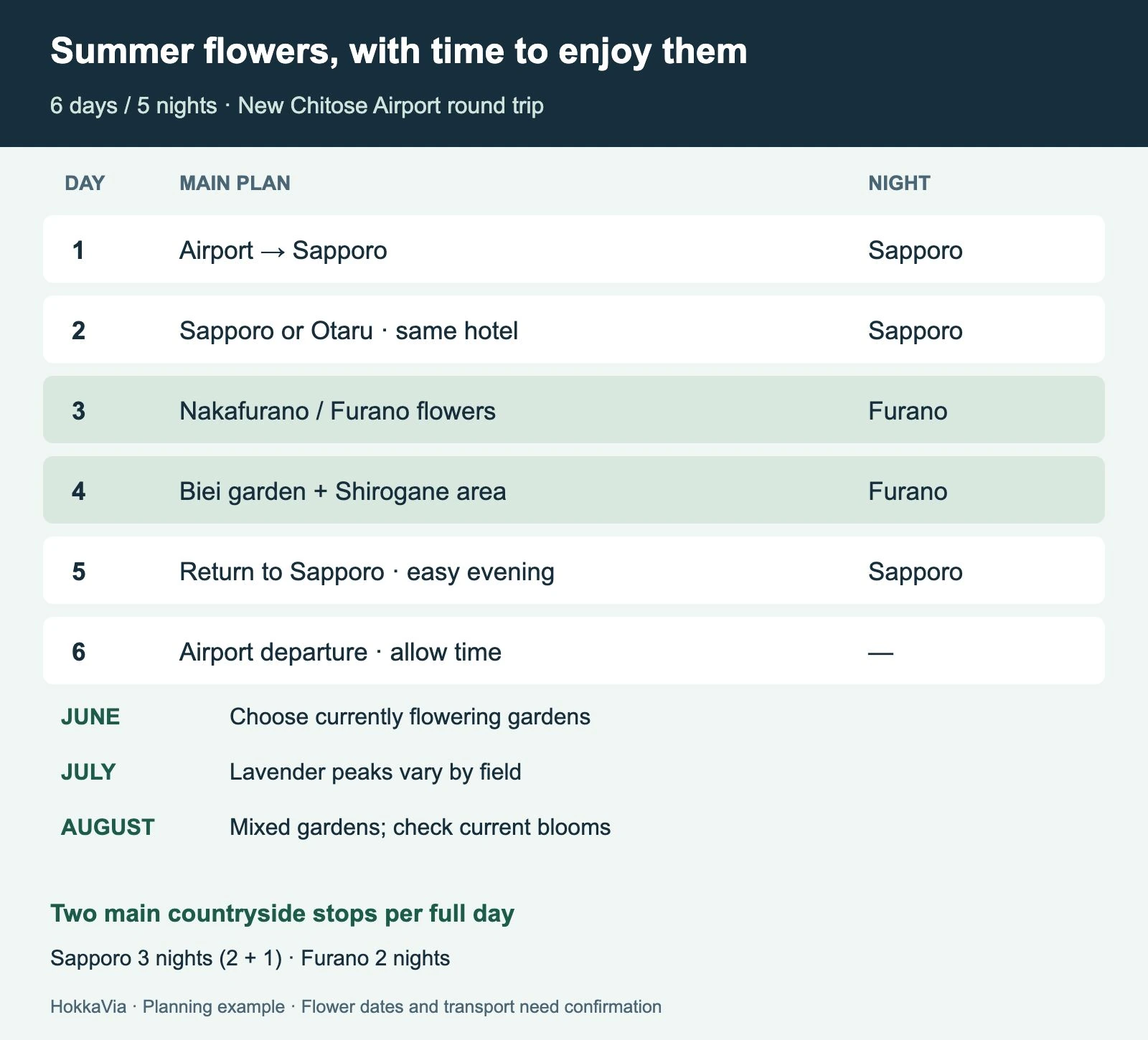
“Summer” covers several different landscapes. Check the individual garden’s current flowering report before fixing a special photo stop. Farm Tomita in Nakafurano and Shikisai-no-oka in Biei are different properties; a photograph of one does not establish the condition of the other.
| Month | Flower choice | Planning consequence |
|---|---|---|
| June | Green scenery and flowers confirmed locally; lavender may begin later in the month | Do not promise the full July rainbow field. Keep city visits and an indoor alternative. |
| July | Different lavender fields and mixed flower bands have different peaks | Choose your priority field, then allow queues, a lunch window and hot-weather breaks. |
| August | Mixed summer gardens according to current bloom reports | Do not promise unharvested July lavender. Check any sunflower site’s actual dates and location. |
Farm Tomita lists its Traditional Lavender Field as usually flowering from late June to late July, with best viewing in early to mid-July. Its Irodori Field usually flowers in early to late July, with best viewing in mid to late July. These are different field calendars, and weather can shift them. A late-July visit should not be sold as the identical scene seen in an early-July photograph.
Do not add Hokuryu sunflowers, eastern lakes or a far-northern cape just because they appear on a summer highlights list. Their geography and seasonal access require their own time. Decide whether flowers, mountains or another region is your main purpose before booking all the nights.
Days 1–2: settle into Sapporo, then choose a city or Otaru day
Day 1: use the real arrival time
Allow for immigration where applicable, bags, terminal walking and hotel access. JR Hokkaido gives the fastest airport–Sapporo train as 33 minutes, station-to-station. It is not a landing-to-hotel estimate. Stay near a convenient station if using rail; compare a transfer when several cases, a stroller or walking difficulties make the last part cumbersome.
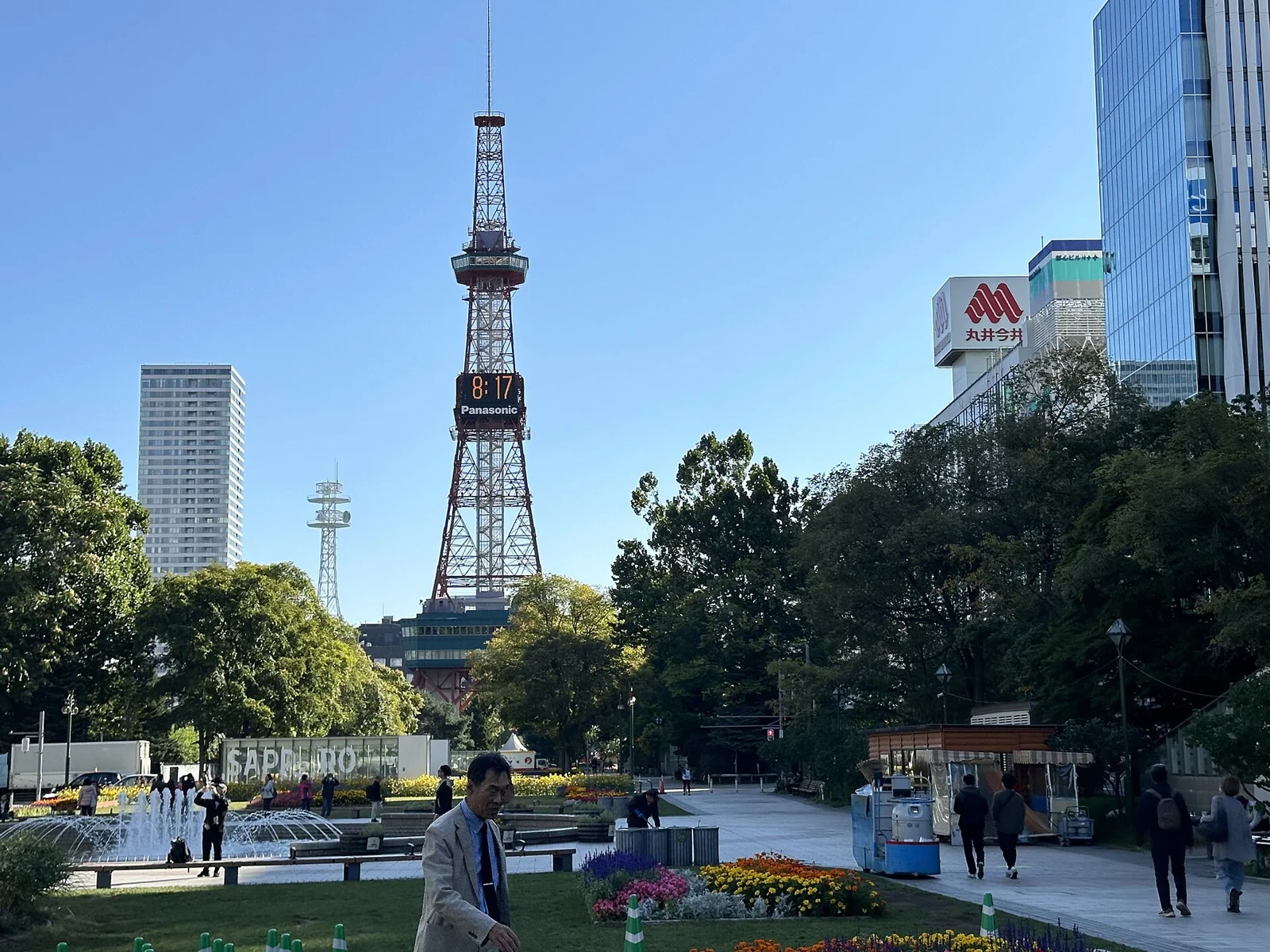
Keep the first evening close to the hotel. Odori Park and a nearby meal are enough after an early arrival; a late flight should mean check-in and dinner. Travellers from the US or Australia should count the local arrival date, connections and long-haul fatigue before treating day 1 as a full sightseeing day.

Day 2: one choice, with no suitcase move
Stay in Sapporo for a market or city-centre morning, lunch and one compact afternoon area. Alternatively, visit Otaru for the canal, lunch and Sakaimachi Street, returning to the same room. Rail is practical for many city trips, provided the walks between stations and sights suit everyone.
Adding Yoichi distillery, Shakotan coast and every Otaru shop changes the day substantially. Replace part of the plan if one is essential; do not make them automatic extras before the countryside block. Use a quiet afternoon for laundry, supplies or recovering from the flight.
Day 3: Sapporo to Furano, with the right flower field
After breakfast and checkout, allow roughly 2½–3½ hours for the road journey and a comfort break before counting visits. Congestion, the exact hotel and additional stops can extend this planning window. Travel through Nakafurano and choose one main garden, with a second short stop only if time and energy allow.
Farm Tomita: select a field, not a guaranteed photograph
Use the flowering report and the calendar above to decide whether lavender or mixed flowers are the priority. Leave time to walk on permitted paths and have a proper lunch. Buying snacks or photographing every patch can take longer than expected; a coach schedule or map estimate is not your personal time allowance.
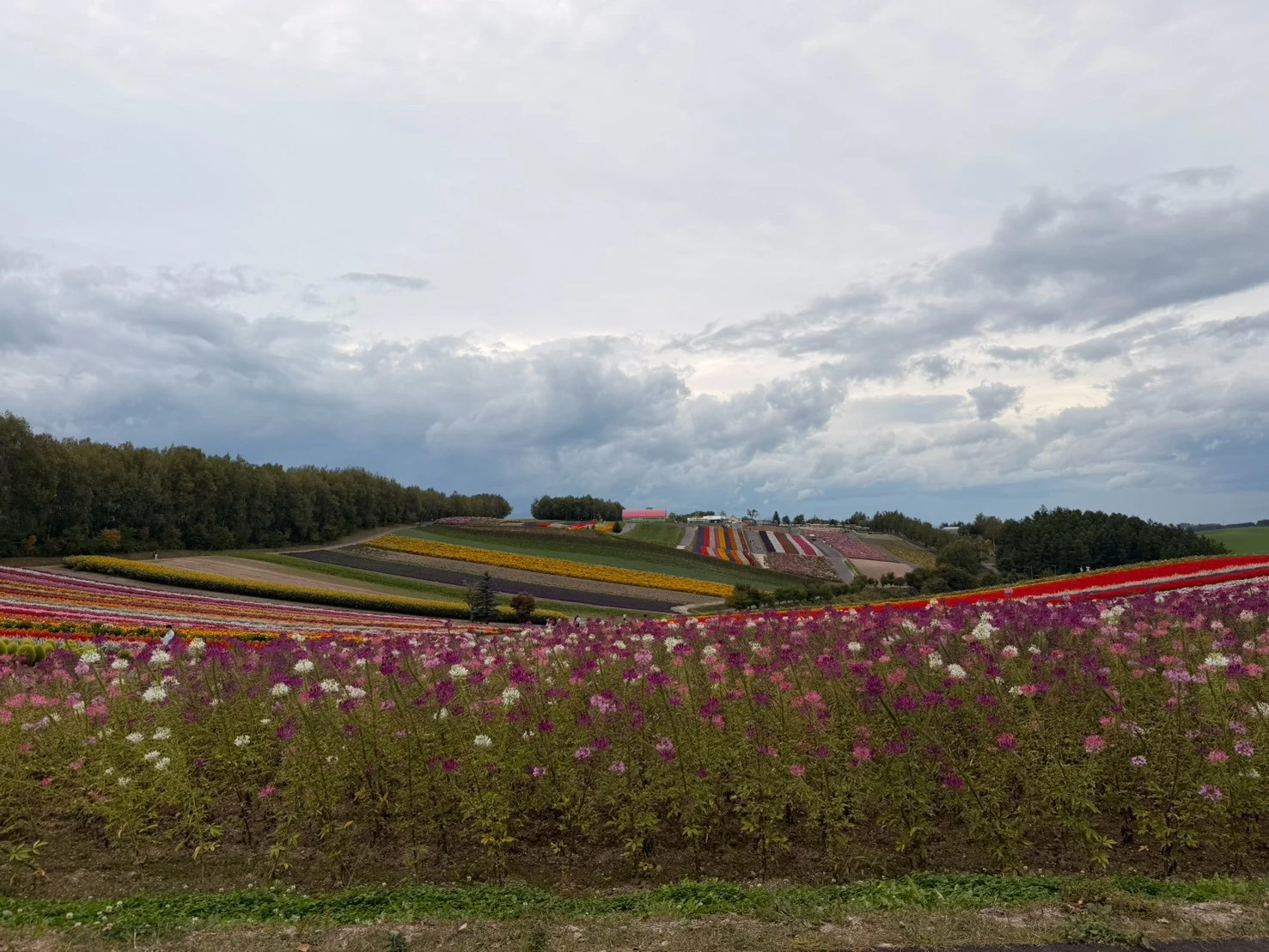
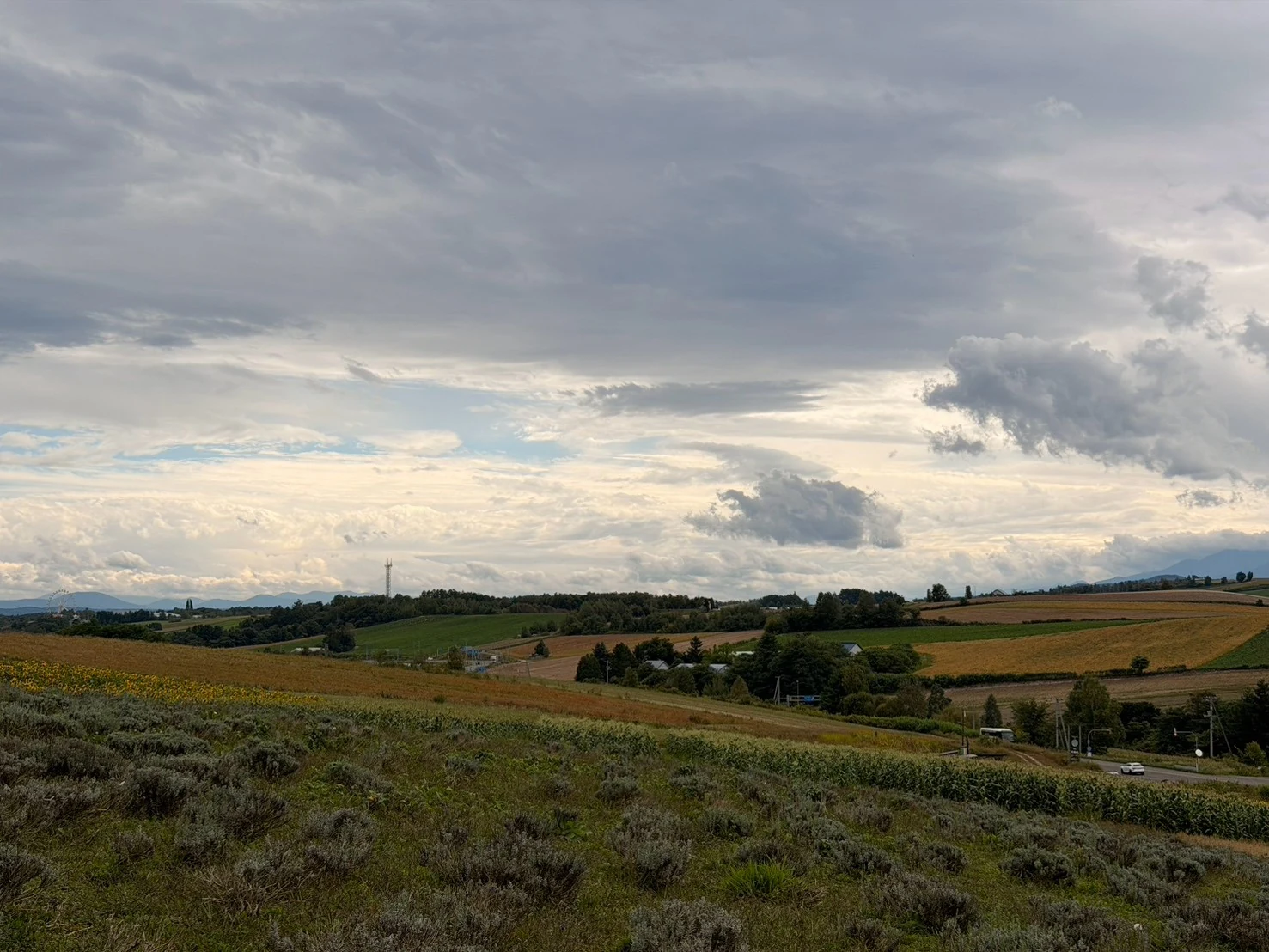
The hero photograph on this page shows Shikisai-no-oka in Biei, not Farm Tomita. The two gardens belong on different parts of this route. Do not repeat the same long detour simply to reproduce an image after the relevant flowers have passed.
Check where your Furano hotel actually is
A town hotel, Nakafurano property and resort-area hotel have different evening transport and restaurant options. Confirm dinner hours and whether a meal is included. Check in with time to settle rather than squeezing a full Biei circuit into this transfer day. If food requirements are important, arrange the rural lunch and dinner before the day starts.
Day 4: Biei’s gardens and Blue Pond without checking out
Leave the main cases at the same Furano hotel, subject to its arrangements. Choose two main priorities, for example Shikisai-no-oka and the Shirogane Blue Pond area, with lunch between them. Allow roughly 45–75 minutes between the Furano hotel and a first Biei stop as an initial planning allowance; the actual locations and traffic determine the day. A garden entrance, hill drive and Shirogane are not one walkable cluster.
Shikisai-no-oka: garden time and optional rides
Flower choices depend on the month. The operator’s current information distinguishes summer garden operations from winter activities and charges admission in July–September. Optional tractor-bus rides, carts and the alpaca area have separate charges and conditions. Bring an appropriate payment method; the operator currently lists cash-only ride payments. Recheck travel-year openings and prices.
The garden tractor bus is also called “Norokko”. It is not the JR sightseeing train, and buying a railway pass does not book a garden ride. Slopes, queues and paths still matter if walking is difficult. Confirm actual access and ride suitability rather than assuming a vehicle removes every step.
Shirogane Blue Pond: allow a weather-dependent visit
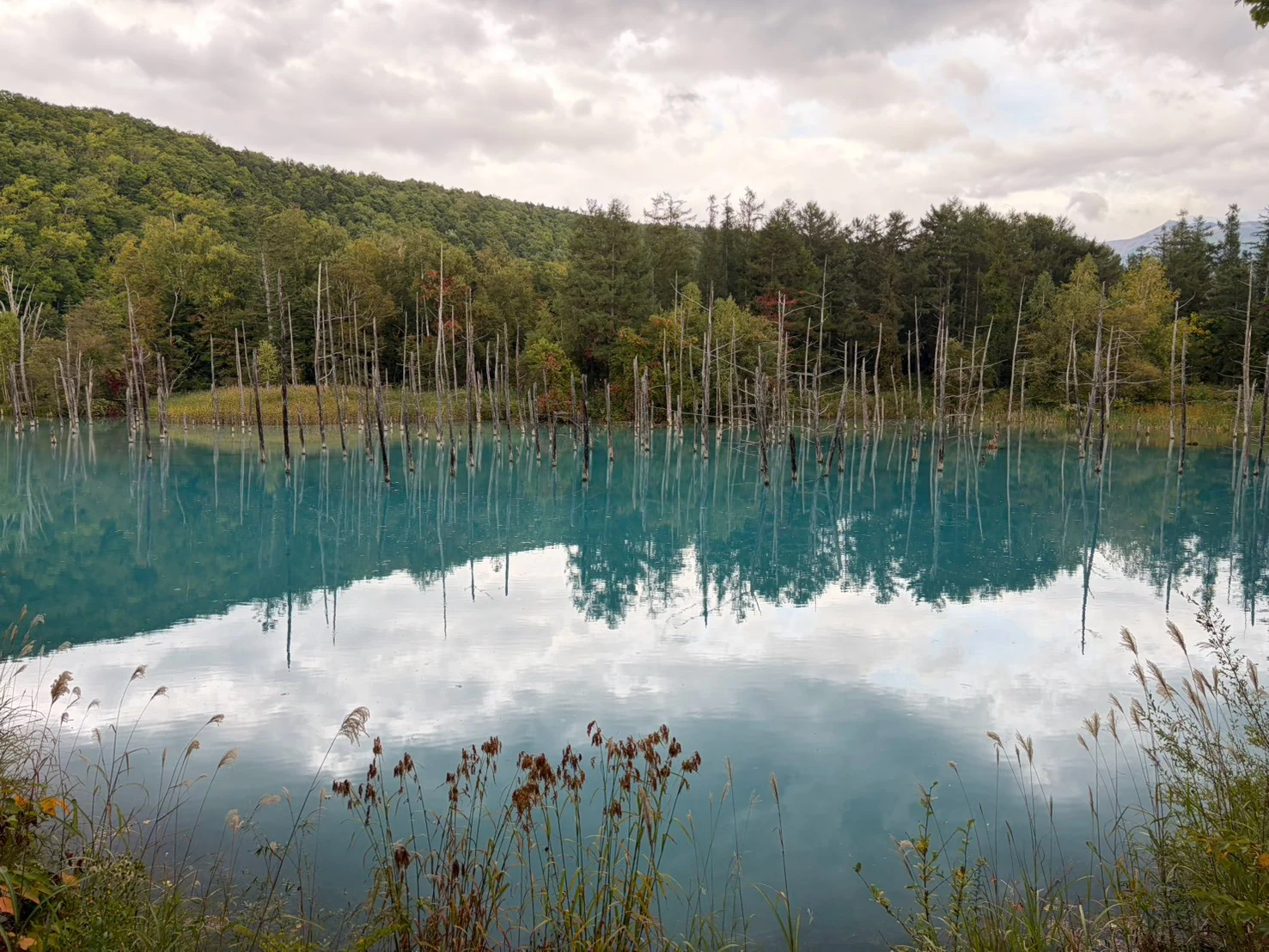
The water’s colour changes with light, weather and other conditions. Use the permitted viewing path and allow time for the approach, toilets and return to the car. A bright turquoise photograph is not a daily colour guarantee. If rain or heat makes the visit uncomfortable, shorten it or replace the afternoon with a rest rather than adding another distant attraction.
Asahiyama Zoo or a mountain ropeway can be a separate priority, but neither is a quick extra after every garden, tree and waterfall. Use the Furano–Biei guide for alternatives and replace one of the day’s main stops if necessary.
Days 5–6: return to Sapporo before flying
Day 5: treat the return as a transfer day
Have breakfast, check out and return to Sapporo. Reserve roughly 3–4 hours for the road journey with breaks, then confirm the actual route. One nearby short visit may fit, but a full Biei tour, long lunch, outlet shopping and city night view should not all be promised. The final city evening gives useful time for bags, laundry and an uncomplicated dinner.
If you want another full countryside day, add a night instead of using the airport day. A summer scenic drive is more enjoyable when the driver can stop only where parking is permitted and the schedule can absorb a toilet or shade break.
Day 6: work backwards from the flight
Use the airline’s current check-in requirements, terminal, hotel-to-station access and transport conditions. Allow for lifts, bags and busy platforms. An early departure may suit a final airport-area hotel instead; change night 5 explicitly on the booking list.
A late flight can leave time for breakfast nearby, but it should not become a final Furano excursion. The last Sapporo night reduces the distance from the previous base; it cannot guarantee transport or flight operations.
Rail, rental car, day tour or private driver?
City days and rural flower days have different transport needs. Compare the whole connection, including station access, luggage and the return, rather than only a train’s running time.
| Option | Useful for | What to confirm |
|---|---|---|
| JR / subway | Airport, Sapporo and many Otaru trips | Station access, reserved seats where required and baggage |
| Rural rail / local bus | A small selection of sights on an actual operating date | First and last connection, temporary station operation and walks |
| Rental car | Flexible countryside travel with a suitable driver | Your licence documents, rental rules, parking and fatigue |
| Fixed day tour | A clear route without arranging each connection | Meeting point, stop duration, luggage and cancellation terms |
| Private driver | Hotel transfers and selected garden days | Actual route, service hours, vehicle / bag fit and overnight costs |
Farm Tomita’s access information makes clear that a station or bus stop still leaves a walk or taxi connection. Furano Station is not the garden entrance; Biei Station is not the Blue Pond. Check the whole journey, including the return service, before relying on a rural bus.
The JR seasonal train page checked on 11 November 2026 still describes June–September 2026. For summer 2027 or later, confirm that year’s trains, reservations, temporary station and dates directly with JR. Do not copy an older Norokko timetable into a future trip. A rail pass does not automatically cover every local bus, admission or garden vehicle.
A private car need not be hired for all six days. Compare city transport with selected countryside service blocks. A fluent guide, attraction reservation and continuous on-call driving are separate arrangements, not automatic features of a driver service.
Summer weather, safe photo stops and working farmland
Prepare for heat as well as cool evenings
Hokkaido can have hot summer days. Carry water, sun protection and a light rain layer, with an extra layer for evenings or higher ground. Keep shade, toilets and a proper meal in the day, especially for children and older travellers. A rainy day is not automatically a clear mountain-view day; a mountain walk needs its own clothing, time and fitness decision.
Scenic views do not create permission to stop or enter
Biei’s fields are working private farmland. Stay on permitted visitor paths and public areas. Do not enter planted fields, farm tracks or restricted land for a photograph, and do not block traffic or farm access. Soil carried on shoes can harm crops. Follow local signs even where a familiar tree or viewpoint appears in an old article.
Keep the itinerary flexible for conditions, while respecting booked meals, service hours and cancellation terms. Scenic driving, a hike and an onsen rest day are different activities; choose the experience your group actually wants rather than combining them into one rushed afternoon.
Two countryside nights, luggage and comfortable boarding
Write check-in and check-out dates beside all five nights. Ask the Sapporo hotel about storage between stays before leaving luggage; permission, timing and delivery acceptance vary. A two-night Furano stay avoids moving the main cases on day 4, but it does not guarantee laundry facilities or late dinner. Check the hotel’s exact location, beds, meals, lift access and cancellation conditions.
Give suitcase numbers and dimensions, stroller size and any folding walking aid when selecting a vehicle. Passengers, luggage and child seats must fit together. For children, send age, height and weight. Do not assume bags can stay in the driver’s car overnight.
Vehicles with electric steps can be arranged for older travellers or anyone concerned about high boarding steps. The driver can offer a hand and support when boarding and alighting. Explain the need before booking so the actual vehicle can be confirmed. This does not establish wheelchair-lift capability, accessible garden paths or medical assistance.
Set a realistic walking limit and keep one afternoon optional. Share allergies and dietary requirements before rural days: seafood or vegetarian wording does not establish the stock, cooking alcohol or preparation method. If specific meals or prayer breaks matter, plan them around actual facilities and restaurant opening times rather than assuming every garden has suitable options.
Budget for five nights and the service days you choose
Separate flights, five guest hotel nights, guest meals, local transport, car-service days, admission and any driver accommodation. No verified all-in six-day package price applies to this example. Summer room stock and prices vary; compare refundable conditions and actual room availability before confirming transport.
For context, HokkaVia currently lists an Alphard Biei–Furano day tour from ¥65,000 per vehicle in April–November, up to 10 hours, with Sapporo pickup and return. It is a starting day-tour rate, not the price of this two-night countryside block. Do not multiply it by six to invent a package total.
Current service information includes fuel, expressway tolls and parking for the agreed route. Guest accommodation, meals and admission are separate. Listed overtime is ¥5,000 per additional 30 minutes; driver accommodation, when an overnight is required, starts from ¥15,000 per night depending on the area. Your guest room does not provide the driver’s room. Ask how separately hired days, waiting and overnight arrangements affect the written total.
Confirm payment timing, cancellation terms and weather-related changes in the actual quote and booking conditions. See the current price and service information. Vehicle availability, pickup and drop-off towns, dates and the final route determine the quotation.
Four days, a longer summer holiday or another region
Four days and three nights: choose one rural focus
A short trip can use three Sapporo nights, with arrival, one city or Otaru day, one focused countryside day and departure. The flower day involves a long return journey. Choose either a Nakafurano / Furano priority or a Biei priority; do not promise every garden, pond, zoo and mountain. This version avoids a hotel move but gives less weather flexibility than two countryside nights.
Seven or ten days: add depth before distance
Add a local night, a separate mountain day if appropriate, or a clearly planned onsen block. Compare our seven-day itinerary and ten-day itinerary. Hakodate, Shiretoko or far-northern Hokkaido can justify a different airport and route. They should replace part of this central plan, not become a quick summer detour.
If an event or seasonal train is essential, confirm the actual travel-year operation before paying for a non-refundable stay. A previous year’s fireworks date or train photograph is inspiration, not a reservation.
Request a written quote for your summer flower route
Send dates and flights, the five-night hotel list or preferred bases, adult and child numbers, case sizes, child-seat and walking needs, dietary requests and two or three essential places. Tell us whether lavender, mixed flower gardens or the Blue Pond is your priority, and which city days you will arrange independently. Distinguish the international flight dates from the six calendar days actually spent in Hokkaido.
HokkaVia is operated by LankaMe Japan Co., Ltd. Vehicle operations are carried out by transport operators holding the permits required under Japanese law. Confirm the actual vehicle, service dates and hours, driver overnight arrangements, inclusions and written booking conditions before deciding.
Frequently asked questions
Which month is best for a Hokkaido summer itinerary?
Choose the scene you want. Different Farm Tomita fields usually peak at different points in July; June and August need their own current flower choices. Check the specific field report rather than treating every summer day as lavender peak.
Does this itinerary mean six full sightseeing days?
No. It is six calendar days and five hotel nights, including arrival and departure. Full-day touring is concentrated between the flight days.
Can I visit Furano and Biei in one day from Sapporo?
A focused day trip is possible, but the return drive leaves less visiting time. Choose a small number of priorities. Two Furano nights provide a complete countryside day without checking out.
Will I see lavender in August?
Do not assume that July lavender remains unharvested. August can offer other flower gardens; check the actual field and year before making it the reason for the trip.
Can I rely on an old Norokko train timetable?
No. Confirm the operating year, dates and stations with JR. The garden tractor bus called Norokko is a separate attraction and does not share a railway ticket or timetable.
Do I need a private driver for every day?
No. Many airport and city journeys suit rail. Compare selected countryside car days with public transport, including last-mile access, bags and the return connection.
Is this suitable for older travellers or small children?
The pace can be adapted with fewer stops, lunch and rest breaks. Electric-step vehicles and a driver’s hand for boarding can be arranged; garden paths, wheelchair needs and child seats require separate confirmation.
Are hotels and meals included in the day-tour starting price?
No. The published starting day-tour rate is not an all-in overnight package. Confirm guest rooms, meals, admission, service hours and any driver accommodation in the written quote.
What if the flower weather is poor?
Use current reports and an agreed indoor or shorter alternative. Two nights create some flexibility, but booked services, meals and cancellation terms still apply; perfect blooms or pond colours cannot be guaranteed.
Sources and planning notes
Official attraction, transport and HokkaVia information checked on 11 November 2026. Flower windows are typical periods, not a blooming guarantee. The current JR seasonal page describes 2026; reconfirm the operating year for a future summer. Travel allowances are not guaranteed driving times.
- Farm Tomita — Traditional Lavender Field
- Farm Tomita — Irodori Field
- Farm Tomita — Access
- Shikisai-no-oka — Summer garden and rides
- Biei Tourism — Visitor rules
- Hokkaido Tourism — Summer travel
- JR Hokkaido — Seasonal trains; check travel year
- JR Hokkaido — Airport trains
- HokkaVia — Prices and service conditions