HOKKAVIA · 22
Hokkaido 10-Day Itinerary: A Relaxed Route from Sapporo
Ten days can give you more time in a place, rather than more time in the car. This New Chitose Airport round trip pairs Sapporo and Otaru with two countryside nights and two nights by Lake Toya, leaving room for meals, weather changes and an afternoon with no fixed plan.

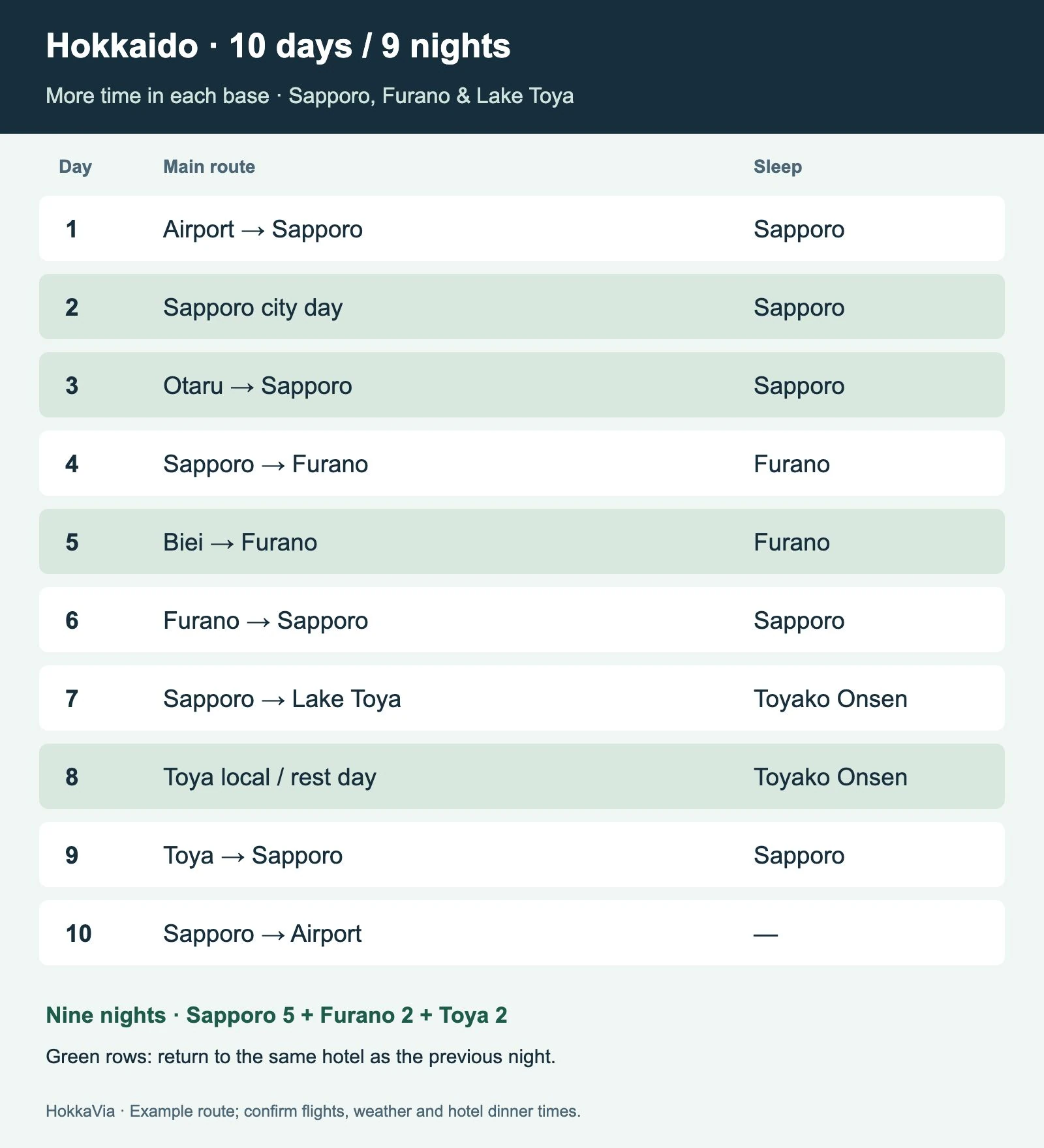
A Hokkaido 10-day itinerary with nine nights accounted for
This route stays in central and southwestern Hokkaido. It combines city food and shopping, an Otaru day trip, the Furano–Biei countryside and a lakeside onsen stay. It suits a first visit with children, older relatives or anyone who wants time to settle into a hotel. It is a planning example, not a package including rooms, meals or admission.
| Day | Main plan | Hotel night |
|---|---|---|
| 1 | New Chitose Airport → Sapporo; light evening | Sapporo 1 |
| 2 | Full Sapporo city day | Sapporo 2 |
| 3 | Otaru day trip; return to the same hotel | Sapporo 3 |
| 4 | Sapporo → selective Furano / Nakafurano visits | Furano 1 |
| 5 | Biei day trip; return to the same Furano hotel | Furano 2 |
| 6 | Furano → Sapporo; transfer and an easy evening | Sapporo 4 |
| 7 | Sapporo → Lake Toya; early ryokan arrival | Toyako Onsen 1 |
| 8 | One local activity or a full onsen rest day | Toyako Onsen 2 |
| 9 | Lake Toya → Sapporo; time to repack | Sapporo 5 |
| 10 | Sapporo → New Chitose Airport | — |
The total is Sapporo five nights, Furano two and Toya two. The Sapporo nights are three separate booking blocks: nights 1–3, night 6 and night 9. The middle Sapporo stop breaks the north-to-south journey; the final one puts you back in the city before flying. This costs two extra check-ins, so compare the alternative below if changing rooms matters more than shorter transfer days.
Days 1–3: settle into Sapporo, then visit Otaru
Day 1: leave room for the actual arrival
Count immigration where applicable, baggage collection, the walk to transport and hotel access before booking dinner. JR Hokkaido lists the fastest New Chitose Airport–Sapporo train at 33 minutes. That is station-to-station, not landing-to-hotel. A station-accessible hotel can make rail convenient; several cases, a stroller or difficulty walking may favour a private transfer.
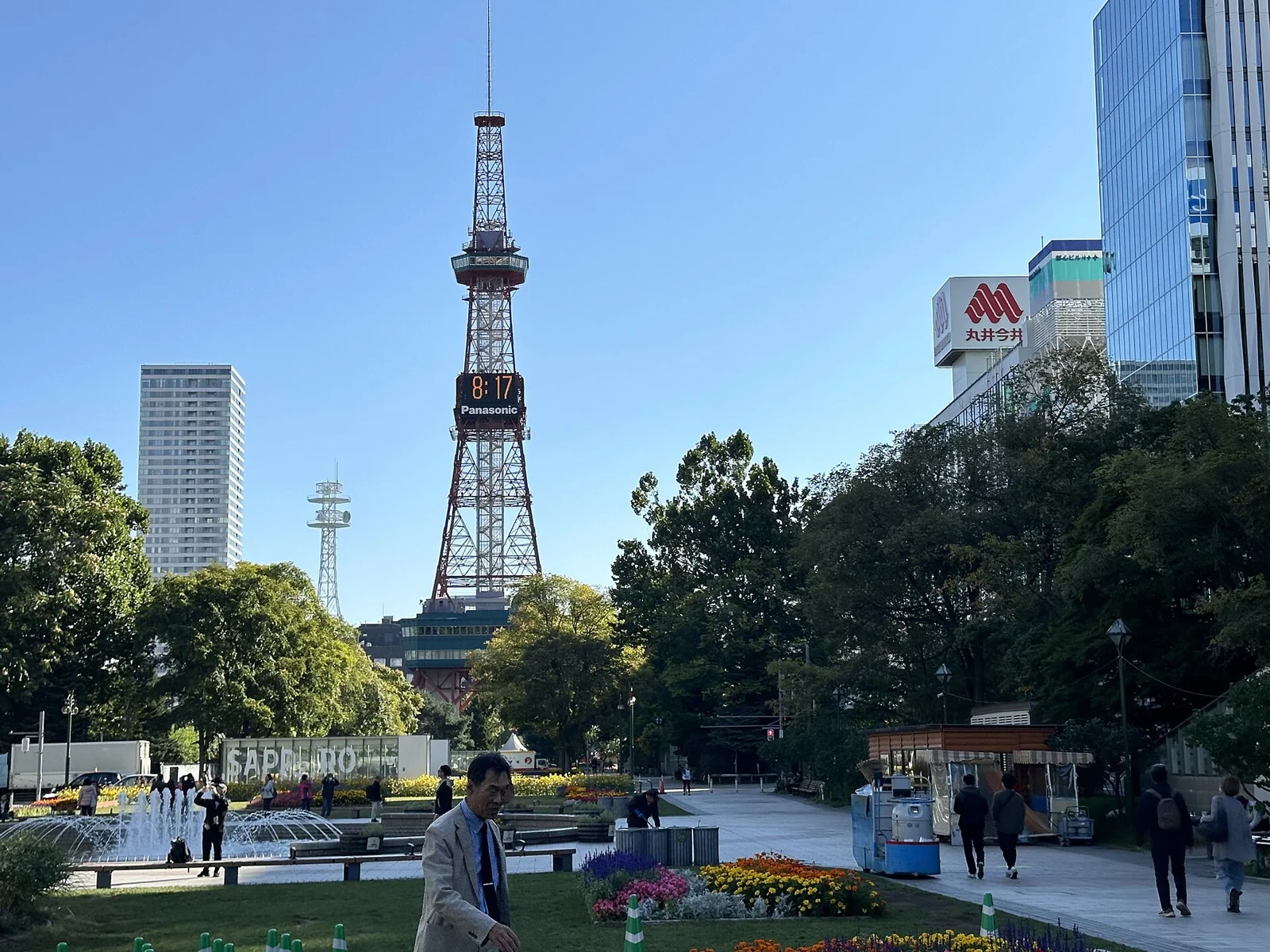
Keep the first evening close to your accommodation. Odori Park and a nearby meal are enough if you arrive early; a late arrival should mean check-in and dinner. US and Australian travellers should allow for the local arrival date, connecting flights and long-haul fatigue when counting ten days on the ground.

Day 2: a real city day, without packing up
Choose one main morning visit, a proper lunch and a compact afternoon area. For example, pair Odori and the city centre with an indoor visit or shopping, rather than crossing the city repeatedly. Keep a cafe or hotel break available. A slow day is useful for getting over the flight, buying an extra layer and discovering how much walking your group enjoys. See the Sapporo guide to choose interests rather than collect every landmark.
Day 3: Otaru, with the same Sapporo room waiting
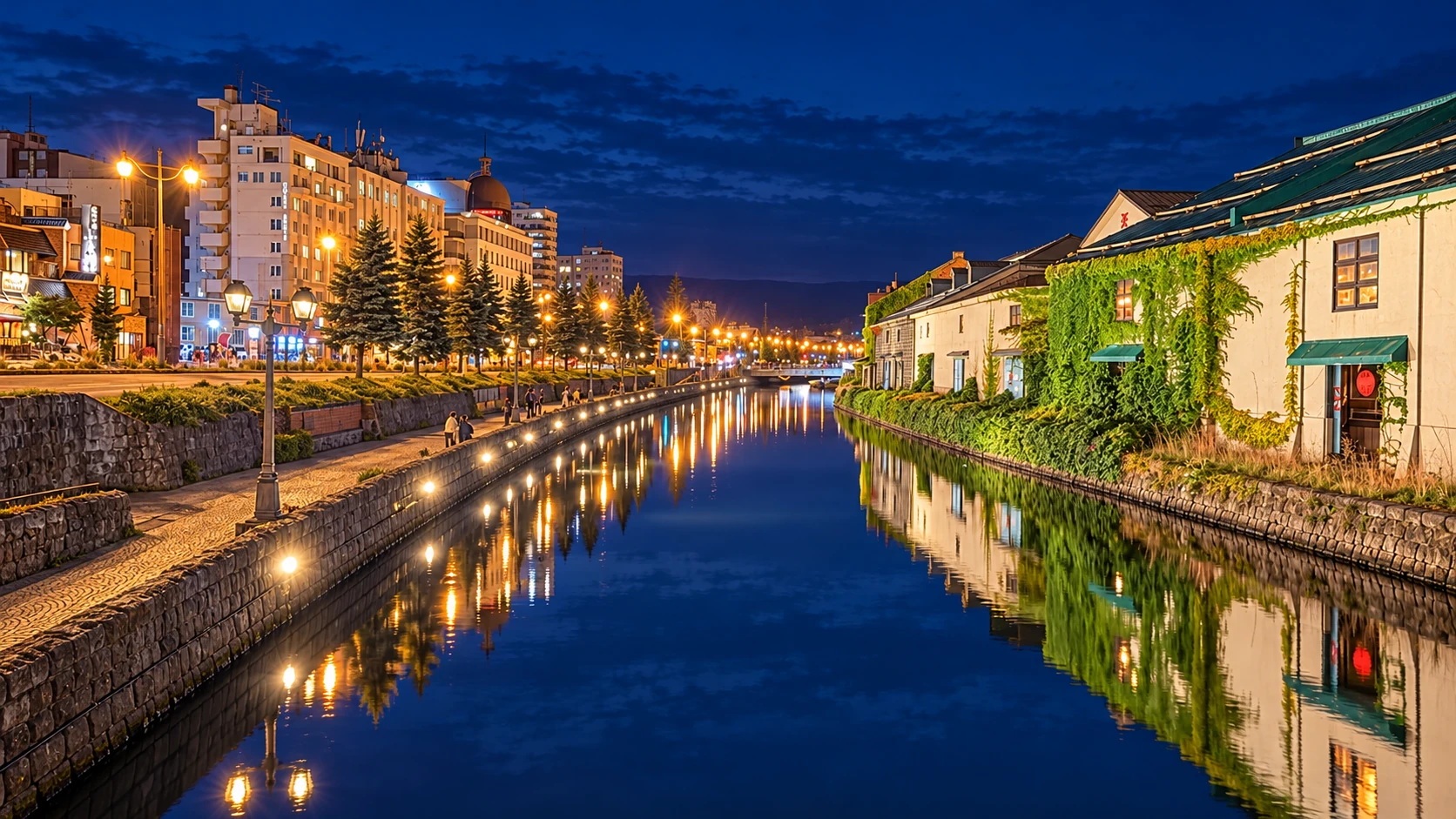
Build the day around the canal, lunch and Sakaimachi Street. Rail works well if everyone can manage the walks between the station and sights; a car can reduce exposed walks and accommodate different energy levels. Return to the same Sapporo hotel so bags need not travel with you.
Nikka Yoichi Distillery is a possible replacement for part of Otaru, not an extra after every shop, cafe and viewpoint. Confirm the visitor arrangements for your date. The Otaru and Yoichi itineraries help you decide which version fits.
Days 4–6: two nights in Furano, with a separate Biei day
Day 4: Sapporo to Furano, with selective stops
Reserve roughly 2½–3½ hours for travel and a comfort stop before counting attractions; snow, queues and your exact hotel can extend this. These are planning windows, not a driving guarantee. Choose one or two main visits around Furano or Nakafurano and check in without racing the dinner deadline. A town hotel and a resort-area hotel have different access to evening restaurants.
Day 5: Biei without a suitcase deadline
Leave the large bags at the same Furano hotel, subject to its arrangements, and choose two priorities in Biei. A flower garden plus the Shirogane area can be a day in itself once lunch, walking and the return are included. Do not add Asahiyama Zoo, a mountain ropeway and every famous tree to the same relaxed day. The benefit of two nights is returning to a familiar room, not filling the saved packing time with more driving.
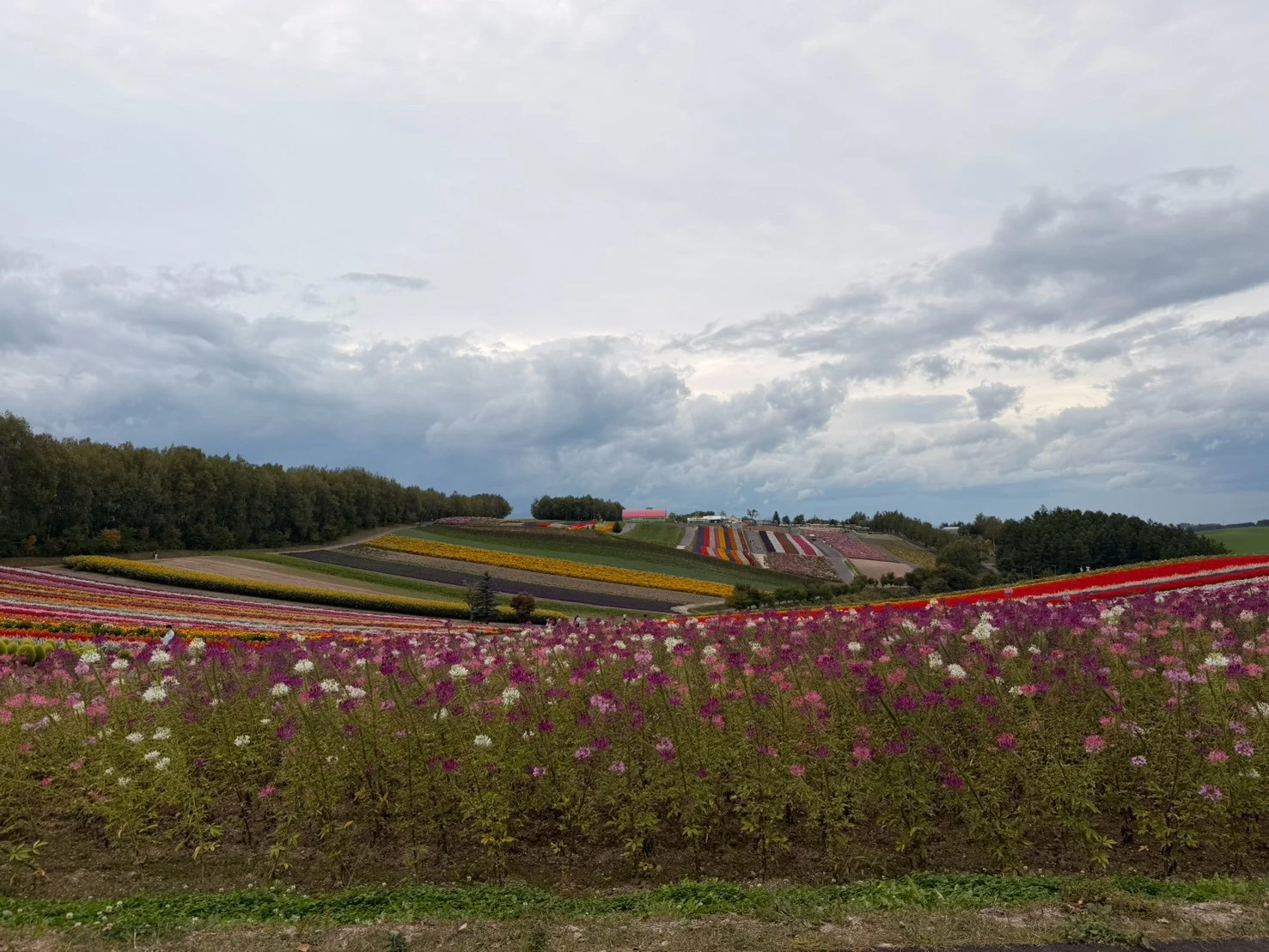
Farm Tomita gives mid-to-late July as the usual best viewing period for its Irodori Field; other fields and years differ. The photograph below is Shikisai-no-oka in Biei, not Farm Tomita. Farmland remains private even under snow. Stay on permitted paths and never walk onto the frozen Blue Pond.
Day 6: the return is the main task
Have breakfast, check out and travel to Sapporo. Leave roughly 3–4 hours for the journey and breaks depending on the starting point and route. One short stop may fit, but avoid making this another full Biei excursion. An uncomplicated city evening provides time for laundry, a restaurant booking or a rest before the lake stay.
For attraction choices and seasonal transport, use the Furano–Biei guide. Seasonal sightseeing trains, flowers and ski facilities are separate products with date-specific operations; none is guaranteed merely because you have two countryside nights.
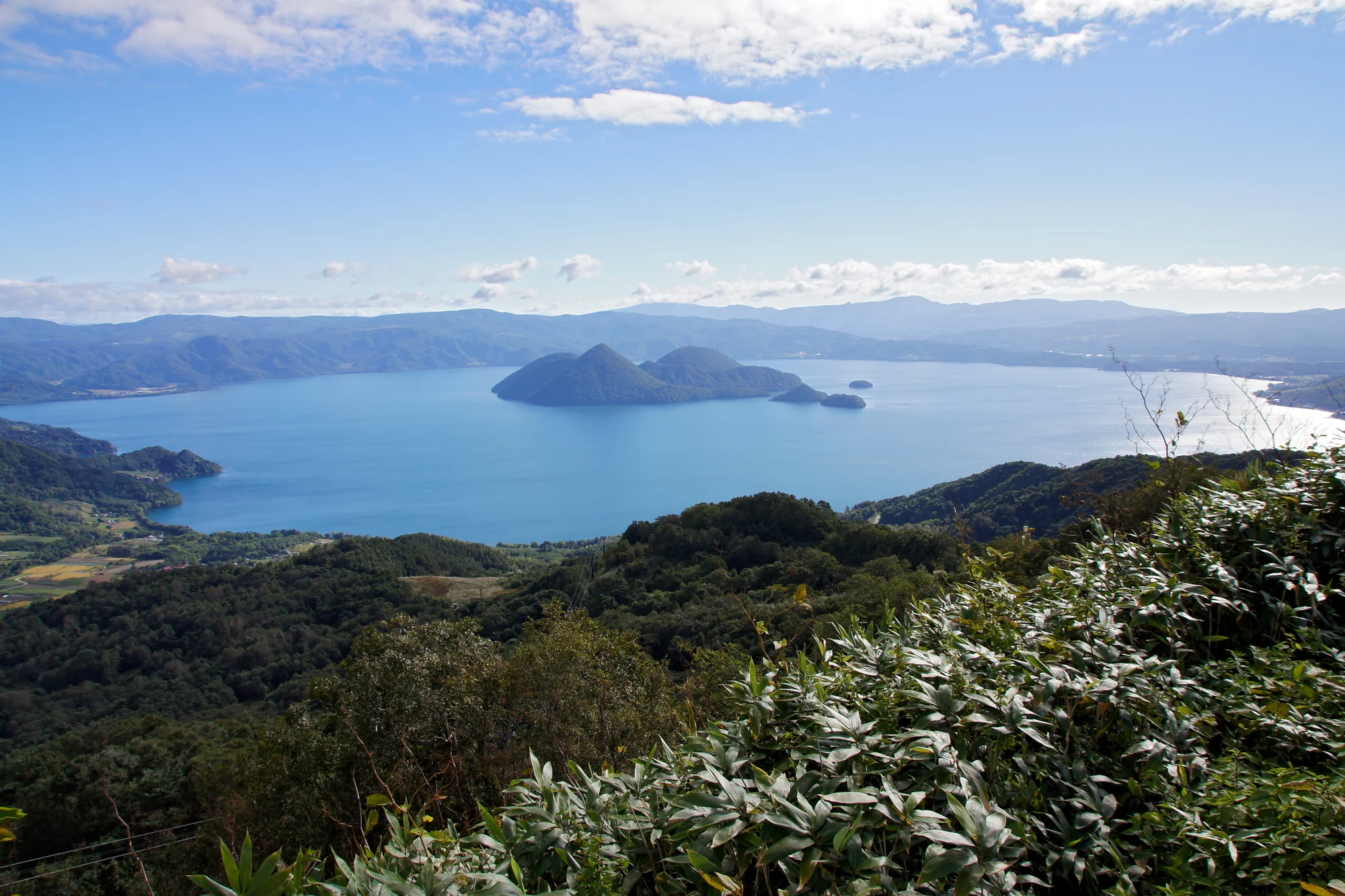
Days 7–8: two nights at Lake Toya, with time for the ryokan
Day 7: protect the hotel arrival and dinner
Travel from Sapporo after breakfast, with a break and at most one principal viewpoint before checking in. Toyako Onsen’s tourism association gives about 2 hours 10 minutes for driving via Route 230. For a sightseeing transfer, allow a larger window—roughly 3–4 hours with a stop—then revise for road conditions. A map estimate does not include a leisurely lunch or winter delays.
Confirm the ryokan’s check-in, latest dinner arrival, meal plan and bath access before choosing stops. Two nights at the same property can mean two included dinners; ask whether menus differ and whether dietary requests can be met on both evenings. A lake-view room, private bath and late dinner are not automatic features of an onsen booking.
Day 8: choose one activity, or choose to stay
Usuzan Ropeway, a lake cruise or the Volcano Science Museum can be the main outing; a full day at the hotel and lakeside is also a valid choice. A ropeway visit needs walking and waiting beyond the ride itself. Wind or maintenance can stop operations, while boats have their own seasonal timetable and weather decisions. Check the actual date instead of building the day around an assumed sailing or fireworks time.
Keep the afternoon close to the hotel if your group values the baths, a nap or a slow meal. For more local choices, see the Lake Toya guide. Noboribetsu can replace the onsen base if that is your priority; visiting both towns is a separate choice that adds travel to this rest block.
Days 9–10: return to Sapporo before the flight
Day 9: an easy return and a useful final evening
Have breakfast at the ryokan, check out and return to Sapporo with a comfort break. Do not promise a long scenic detour, outlet shopping and a city night view on the same transfer. Use the remaining time to collect stored luggage if prearranged, do final shopping near the hotel and pack within your airline’s allowance.
Day 10: plan around the flight, not one last distant sight
Work backwards from your airline’s check-in requirements, terminal, hotel access and the current transport situation. Add time for station lifts, bags and crowds. If you have an early flight or want less city-to-airport travel, compare a final night near or inside the airport and revise night 9 on the booking list.
A late flight may leave time for a local breakfast, but it should not turn into a final Furano or Toya excursion. The last Sapporo night reduces the distance from the previous base; it cannot guarantee that trains, roads or flights will operate normally.
Which days need a car, and which can use rail?
Ten days of travel do not automatically require ten days of private-car hire. Compare the whole journey, including station-to-hotel access and luggage, rather than only the time on the train.
| Journey | Option to compare | What to check |
|---|---|---|
| Airport / central Sapporo | JR airport train or private transfer | Bags, terminal, station access and arrival time |
| Sapporo / Otaru days | Rail, subway, walking or selected car hours | Actual walking distance and winter exposure |
| Days 4–6 countryside block | Private hotel transfers and local touring, or date-specific rail / bus connections | Two hotel nights, separate driver costs and service hours |
| Days 7–9 lake block | Private transfers; JR plus local bus; reserved intercity bus | Toya Station is not the lakeside; hotel dinner and final connections |
| Day 8 rest day | No touring vehicle, or a separately agreed local outing | Driver waiting / overnight arrangements are not automatically free |
The Sapporo–Toyako Onsen Donan Bus service is fully reserved. Its current listed adult one-way fare is ¥3,700 and the stated journey is about 2 hours 45 minutes, with possible weather or road delays. Recheck the timetable and booking conditions. Rail to Toya still requires a local bus or taxi to the onsen area; compare the complete connection.
If self-driving, check licence requirements for your own documents, rental conditions and experience with snow before committing. A larger vehicle does not remove winter driving demands. A driver service can simplify rural logistics, but a fluent tour guide, attraction booking or continuous on-call service must be agreed separately.
Summer flowers, winter roads and shoulder-season changes
Summer: use the extra night to reduce pressure
Keep garden visits early enough to leave room for queues, heat, lunch and rest. Blooming dates vary between fields. Two nights in Furano make it easier to choose the better day for Biei, provided any booked activities and the driver’s arrangements can move. Do not assume everything can be changed free of charge.
Winter: shorten or replace the countryside block
Reduce outdoor stops, travel in daylight where practical and build in warm breaks. If the forecast or your party’s needs make the rural block unsuitable, use those nights for a city or one onsen base instead. Skiing is a dedicated activity requiring equipment and lesson decisions; it is not a quick stop between the Blue Pond and a long transfer. December, January and March do not offer identical daylight, snow or event conditions.
Bring suitable boots, dry socks and layers, and allow indoor time for children and anyone uncomfortable on ice. Recheck road and transport information before each transfer. In spring or autumn, retain the hotel framework but choose visits from current opening information rather than summer garden photographs or last year’s event dates.
Hotel bookings, luggage and laundry over nine nights
Write each check-in and check-out date beside the night numbers before paying. “Five nights in Sapporo” means three stays in this plan; it does not mean one continuous reservation. Ask whether using the same city hotel for the return nights helps with luggage, but obtain permission before leaving bags between stays. Storage, delivery acceptance and timing depend on the property.
Choose the countryside hotel for its actual location and dinner options. For the two-night onsen stay, check meal inclusions, cancellation terms, bed or futon arrangements, lift access and bath access. If a private bath is important, confirm availability, reservation method, fees and who can use it. Follow the property’s rules and wash before entering the bath; tattoo policies differ.
For a longer trip, laundry can make more difference than a bigger suitcase. Check machine availability, drying time, opening hours and payment methods; a two-night stay does not guarantee laundry facilities. Share suitcase count and dimensions, stroller size and any walking aid before selecting the vehicle. Guest luggage and passengers must fit together, including child seats. Bags are not automatically stored in a driver’s car overnight.
A comfortable pace for families and older travellers
Plan an honest walking limit, a lunch window and toilet breaks before naming every attraction. Use days 2, 5 and 8 as full days from the same base, with an optional afternoon rather than a mandatory checklist. People in one group may want different amounts of walking; agree a safe meeting point and do not assume the driver can accompany everyone into an attraction.
Electric-step vehicles can be arranged for travellers concerned about a high step, and the driver can offer a hand and support boarding and alighting. Explain your needs before booking so the actual vehicle can be confirmed. This does not establish wheelchair-lift capability, accessible attraction paths or medical assistance.
For children, give age, height and weight for seat planning. For a folding wheelchair, give folded dimensions and explain whether the passenger can transfer to a vehicle seat. Discuss hotel access separately. Share allergies and dietary needs before the route is fixed; a dish described as seafood or vegetarian does not by itself confirm ingredients, stock, cooking alcohol or preparation arrangements.
Budget for the nine nights and the days you actually hire a car
Separate the budget into flights, nine guest hotel nights, guest meals, local transport, agreed car-service days, admission and any driver accommodation. There is no verified all-in ten-day package price for this example. Compare per-person accommodation with per-vehicle transport carefully, especially when several adults share the car but need more than one hotel room.
As current context, HokkaVia lists an Alphard Biei–Furano or Lake Toya–Noboribetsu day tour from ¥65,000 in April–November and ¥70,000 in December–March, up to 10 hours. These are per-vehicle starting day-tour rates, not the price of this overnight route. Do not multiply a day-tour starting price by ten to produce a package quotation.
Current service information includes fuel, expressway tolls and parking for the agreed route. Guest hotels, meals and admission are separate. Listed overtime is ¥5,000 per additional 30 minutes; driver accommodation, when an overnight stay is required, starts from ¥15,000 per night depending on the area. Your room booking does not provide the driver’s room. Ask how a non-touring day affects waiting, accommodation and the price of separate service blocks.
Confirm payment timing, inclusions, cancellation conditions and weather-related changes in your written quotation and booking confirmation. Budget both ryokan dinners if included in the room plan, without paying again for meals already covered. See the current price and service conditions; the final route, dates, pickup and drop-off towns and vehicle availability determine your quote.
Fewer hotel changes, or a different ten-day priority
Remove the middle Sapporo stay only if the transfer suits you
One alternative is Sapporo four nights, Furano two, Toya two and Sapporo one: still nine nights, with one fewer booking block. However, moving directly from Furano to Toya creates a long transfer day. Treat that day as travel with planned breaks, not a full Biei tour followed by a ryokan dinner. Check a route-specific schedule before booking, especially in winter.
Keep the trip focused if Hakodate, skiing or eastern Hokkaido comes first
Replace a countryside or onsen block if a different region is essential. Hakodate may work better with a different arrival or departure airport; Shiretoko or eastern Hokkaido calls for a different route focus. Ten days is not a reason to combine every corner of the island. A ski-led holiday may use several nights at one resort and omit the lake entirely.
Compare our seven-day itinerary and five-day route. Here the extra three days buy a full city day, a full countryside day from the same hotel and a full lakeside day. That is the main improvement to preserve when adapting the plan.
Request a written quote for your own ten-day route
Send travel dates and flight details, the nine-night hotel list, adult and child numbers, suitcase dimensions, child-seat and walking needs, dietary requirements and two or three essential places. Tell us which city days or rest days you will arrange independently, and whether dinner is already booked at the ryokan. If your flight includes Tokyo or an overnight international sector, distinguish those dates from your actual days in Hokkaido.
HokkaVia is operated by LankaMe Japan Co., Ltd. Vehicle operations are carried out by transport operators holding the permits required under Japanese law. Ask for the actual vehicle, service dates and hours, driver overnight costs, inclusions and written booking conditions before deciding.
Frequently asked questions
Is ten days enough for a relaxed Hokkaido trip?
Yes for a focused central and southwestern route. This example uses Sapporo, Otaru, Furano–Biei and Lake Toya. Arrival and departure count within the ten days; it is not a complete circuit of Hokkaido.
Where are the nine hotel nights?
Sapporo nights 1–3, Furano nights 4–5, Sapporo night 6, Toyako Onsen nights 7–8 and Sapporo night 9. The five Sapporo nights are three separate stays.
How is this different from a seven-day itinerary?
The extra time creates a full city day, a Biei day from the same Furano hotel and a full Toya day from the same ryokan. It does not require three more distant destinations.
Why return to Sapporo between Furano and Lake Toya?
The intermediate night breaks a long north-to-south move and helps protect the next day’s ryokan arrival. The trade-off is another check-in. A direct transfer needs a separately planned travel day.
Do we need a driver for all ten days?
No. Compare rail and subway on city days, and quote only the rural or transfer days you need. Confirm how separate blocks, rest days, driver accommodation and waiting are priced.
Can we use this plan in winter?
Use the hotel framework selectively, shorten outdoor visits and consider replacing the countryside block if weather or walking conditions make it unsuitable. Check current transport and attraction operations.
Are nine hotel nights and meals included in the vehicle price?
No, unless your written quotation explicitly says so. Published vehicle starting rates and guest accommodation or meal plans are separate. Check driver accommodation separately as well.
Can an electric-step vehicle and boarding help be arranged?
Yes. Tell us your requirements before booking so the actual vehicle can be confirmed. The driver can offer a hand during boarding and alighting; wheelchair lifts and medical assistance are separate matters.
Can we add Hakodate, Shiretoko or skiing?
Choose the priority and replace a block, then revise the airport, nights and transport. A full ski day or distant region should not be added as a quick stop to this relaxed route.
Sources and planning notes
Official transport, attraction and service information checked on 10 November 2026. Travel windows are planning allowances, not guaranteed journey times. Confirm current timetables, openings, weather, hotel meals and written booking conditions for your dates.